 HappyHorse Model
AI Video Model Inference Speed: Which Is Fastest?
The fastest AI video model is not the one with the flashiest benchmark screenshot. It is the setup that gets you a usable clip sooner at the resolution, quality level, and price your workflow can actually sustain. If you need ten fast previews for prompt iteration, your winner may be different from the one you would choose for a final 720p or 1080p client deliverable. If you need batch generation at scale, infrastructure can matter more than the model name.
That is why ai video model inference speed fastest is really a stack question, not just a model question. Model architecture, scheduler settings, precision, memory bandwidth, kernel optimization, interconnect speed, and retry rate all affect how quickly you move from idea to usable output. A “2x faster” claim means very little if it was measured on shorter clips, lower quality presets, or a more aggressive scheduler than the one you need in production.
The good news is that we already have enough signals to compare platforms and workflows intelligently. GMI Cloud has put useful language around inference performance with TTFT, ITL, and throughput, and those ideas map well to video. Together AI is making aggressive claims around optimized open-source inference. Research like Fast and Memory-Efficient Video Diffusion Using Streamlined Inference shows why memory efficiency and speed often improve together. And on the creative side, tools like Pika and Sora prove that “feels fast” can be more important than any single latency number.
What “AI Video Model Inference Speed Fastest” Really Means

The 3 speed metrics that matter most
When comparing video generation systems, I use three metrics that map cleanly from text inference. GMI Cloud frames inference performance around TTFT (Time to First Token), ITL (Inter-Token Latency), and total system throughput in its 2026 guide on the fastest inference platform for open-source models. For video, the practical analogs are time to first usable output, per-step or per-frame latency, and total clip completion time.
Time to first usable output matters most when you are iterating. If your first preview lands in 12 seconds instead of 40, you can test more prompts, camera motions, and references before committing to a final render. Per-step or per-frame latency matters when a model is generating through diffusion steps or autoregressive frame chunks, because small delays compound hard on longer clips. Total clip completion time matters when you are producing at scale and need finished renders out the door.
A lot of “fastest” marketing only highlights one of those numbers. That is how people end up comparing apples to oranges and wondering why the real workflow feels slower than the benchmark promised.
How video latency differs from text model latency
Video latency is trickier than text latency because every headline number hides multiple knobs. Resolution changes speed. Clip length changes speed. Diffusion step count changes speed. Guidance scale, scheduler choice, and quality presets all change speed. If one vendor says a model is fastest but does not say whether the result was 480p versus 720p, 4 seconds versus 10 seconds, or 12 steps versus 30 steps, that claim is incomplete.
GMI Cloud’s framing is especially useful here because it points to the actual bottlenecks: memory bandwidth and kernel optimization. In its benchmark-oriented post, GMI Cloud says Bare Metal NVIDIA H200 clusters connected with 3.2 Tbps InfiniBand improved speed by 40% on large open-source models like DeepSeek V3 and Llama 3 by maximizing HBM3e throughput. Those models are not video generators, but the principle carries over directly. Many video pipelines are heavily memory-bound, especially once you push larger parameter counts, temporal attention, higher resolutions, or multiple conditioning streams.
A simple checklist helps cut through weak benchmark claims:
- Check resolution: 480p, 720p, 1080p, or higher.
- Check clip duration: 3 seconds and 8 seconds are not comparable.
- Check steps or sampler settings: fewer steps may be faster but visibly worse.
- Check precision: FP16, BF16, FP8, or quantized variants can change speed a lot.
- Check hardware and interconnect: single GPU versus clustered H200s is a different category.
- Check first preview time versus final render time.
- Check retry rate: a slower model that works on the first try may save time overall.
Use that checklist before deciding which ai video model inference speed fastest claim is actually relevant to your production reality.
Fastest AI Video Inference Platforms: What Current Claims Actually Show
GMI Cloud and high-bandwidth infrastructure
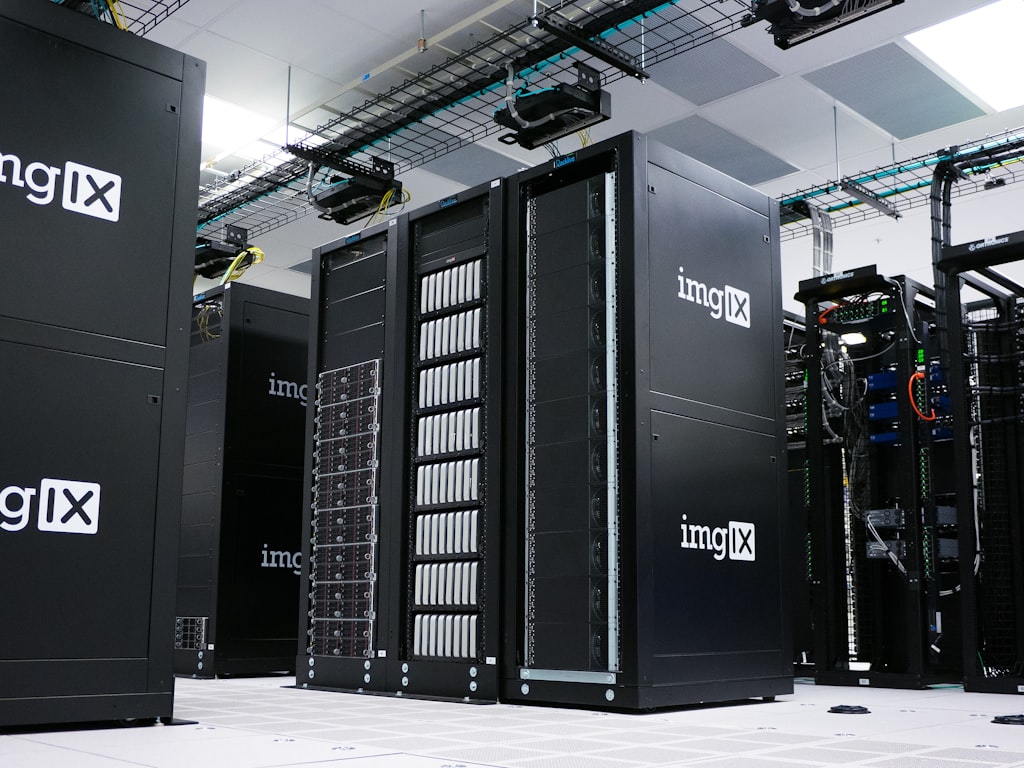
If you care about open-source deployment and raw infrastructure speed, GMI Cloud is making one of the clearest claims on the board. Its 2026 post says Bare Metal NVIDIA H200 clusters linked with 3.2 Tbps InfiniBand deliver the fastest inference for open-source models such as DeepSeek V3 and Llama 3, with reported 40% speed gains by maximizing HBM3e throughput. The important engineering point is not the model list. It is the reason those gains happen.
GMI Cloud argues that large models become memory-bound, especially around sizes like 70B, 405B, and 671B. In video, that same bottleneck shows up when attention caches grow, temporal context expands, and frame generation pushes more data through memory than the GPU can move efficiently. If your video pipeline stalls on moving tensors around rather than on pure compute, faster memory and better interconnects can beat a nominally stronger GPU setup with weaker bandwidth.
That means infrastructure-level speed claims matter a lot for serious video workloads. If you are stitching together text conditioning, image conditioning, motion modules, and upscaling, the stack underneath the model can dominate total latency.
Together AI and optimized open-source inference
Together AI is making a different kind of claim. The company says it can deliver up to 2x faster inference for top open-source models such as Qwen, DeepSeek, and Kimi through GPU optimization. That is worth paying attention to, but it should be labeled correctly: this is a vendor claim, not an independent third-party benchmark.
The practical takeaway is that Together AI is pitching optimization at the serving layer, while GMI Cloud is emphasizing the underlying hardware and interconnect advantage. Those are not the same thing. One can improve kernels, batching, memory layouts, and scheduling on existing infrastructure. The other can change the ceiling by giving the model more bandwidth and lower communication overhead.
There is also a useful directional note from a Reddit discussion referencing OctoML, where people pointed to claimed 1.2x to 3x inference speedups for computer vision and video-related workloads. That is not a verified benchmark either, but it reinforces a consistent pattern: for visual generation, serving and compiler optimizations can move the needle significantly.
So when you compare platform claims, separate them into two buckets:
- Infrastructure-level speed claims: hardware, HBM throughput, InfiniBand, cluster topology.
- Model-serving speed claims: kernel fusion, batching strategy, compiler optimization, scheduler tuning.
If your bottleneck is memory movement, GMI-style infrastructure claims may matter more. If your bottleneck is inefficient serving, Together-style optimizations may matter more. For anyone chasing ai video model inference speed fastest, that distinction prevents expensive mistakes.
Fastest AI Video Model Setups for Open-Source Workflows
When open-source video models are the better speed choice
Open-source workflows can be faster in practice even when a closed API model looks stronger on paper. The reason is control. With an open source ai video generation model, you can tune batch size, precision, scheduler settings, VAE choices, attention implementations, and hardware placement. You can pin the model to a local GPU for rapid tests, then shift larger jobs to optimized cloud hardware once the prompt and motion settings are locked.
That flexibility matters a lot if you want to run ai video model locally. A local setup often wins on first-preview speed because there is no API queue, no cold start, and no network roundtrip. It may lose on full render speed if your GPU is underpowered, but for ideation loops, local still matters.
This is also where related search intent starts converging: image to video open source model, open source transformer video model, and even niche phrases like happyhorse 1.0 ai video generation model open source transformer all point to the same practical decision. Do you want full control over latency knobs, or do you want the convenience of a hosted black box?
How turbo and image-to-video variants change inference time
Turbo variants are often the best speed-value play. A concrete example from the 2026 cheapest-model guide is 1-I2V-14B-720P-Turbo, described as a top choice for fast and affordable image-to-video generation at $0.21 per video on SiliconFlow. That matters because image-to-video usually has a speed advantage over pure text-to-video: the reference image gives the model more structure, which can reduce search space and make outputs more consistent earlier in the generation process.
If you are evaluating an image to video open source model, check whether it supports a turbo scheduler, fewer default steps, or stronger temporal conditioning. Those features can cut generation time without wrecking quality for short clips. An open source transformer video model may also behave differently from a diffusion-heavy pipeline, especially if its generation path relies on chunked latent predictions or more efficient temporal modules.
Before deploying an open-source setup for commercial or internal work, I would always check this speed shortlist:
- Native target resolution and how much speed drops when you upscale.
- Support for FP16, BF16, or FP8 inference.
- Scheduler options and step count flexibility.
- Image-to-video versus text-to-video mode speed difference.
- VRAM usage and whether the model spills into slower memory behavior.
- Multi-GPU scaling efficiency.
- Hosting costs per clip versus local cost per clip.
- Open source ai model license commercial use terms.
That last point matters more than people expect. A model can be perfect on speed and still be unusable for your business if the license blocks commercial deployment or imposes restrictions on output usage.
Fastest Inference Techniques for AI Video Models

What streamlined inference changes in video diffusion
One of the most interesting speed directions right now comes from the arXiv paper Fast and Memory-Efficient Video Diffusion Using Streamlined Inference (2411.01171). The paper presents Streamlined Inference, a training-free framework that leverages the temporal and spatial properties of video diffusion models to improve efficiency. Training-free is the key phrase here. It means the method aims to accelerate inference without forcing you to retrain the entire model stack.
That matters because retraining is expensive, slow, and often unrealistic for teams shipping products right now. A training-free optimization can slot into an existing pipeline much faster. If you are already running diffusion-based video generation, a method that reduces redundant computation across frames or across spatial regions can immediately lower latency and memory pressure.
Why memory efficiency often improves speed
Video diffusion wastes a lot of compute when every frame or latent slice is treated too independently. But video is highly redundant by nature. Neighboring frames share structure. Spatial regions often change incrementally rather than fully. Streamlined Inference targets that reality by exploiting temporal and spatial consistency instead of repeatedly recomputing everything at full cost.
That is why “fast” and “memory-efficient” often travel together in video generation. If your real bottleneck is memory traffic, not raw FLOPS, then reducing tensor movement and cache pressure can speed up generation more than simply throwing another GPU at the same naive pipeline. This matches the broader infrastructure lesson from GMI Cloud: memory bandwidth is often the hidden governor on end-to-end inference speed.
For longer clips and higher resolutions, these gains become even more valuable. A small per-step savings multiplied across dozens of denoising steps and many frames can collapse minutes into something much more manageable. More importantly, memory savings can let you run a stronger preset on the same hardware instead of dropping quality just to avoid out-of-memory errors.
The actionable engineering checklist here is straightforward:
- Look for schedulers that reduce required step count without obvious quality collapse.
- Check whether your stack supports temporal reuse instead of recomputing all frame context.
- Evaluate attention and KV-style caching where applicable.
- Favor pipelines that exploit spatial coherence rather than fully dense recomputation.
- Measure VRAM pressure during long-clip generation, not just average GPU utilization.
- Test whether memory-saving changes improve throughput at the same quality target.
If you care about ai video model inference speed fastest in a production pipeline, technique-level efficiency can matter as much as the model checkpoint itself.
Which AI Video Models Feel Fastest in Real Creative Workflows?

Iterative feedback speed vs final render speed
There is a huge difference between benchmark speed and workflow speed. A tool can post mediocre raw latency numbers and still feel fantastic because it gets you useful previews quickly. That is why the note about Pika’s architectural focus on inference speed is so practical. Pika is often positioned as strong for iterative workflows where creators need rapid feedback, and that maps directly to ideation-heavy use cases like motion tests, camera moves, and style prompts.
If you are doing concept development, iterative feedback speed beats pure final render speed most of the time. You want something that lets you test ten variations rapidly, discard eight, refine one, and upscale or rerender the winner. In that context, the “fastest” model is the one that keeps your creative loop moving.
Why some slower models still win in production
Now compare that to the 2026 review note on Sora. The review says Sora’s generation time is relatively long, but the usability rate of each output is high. That is a different kind of speed advantage. If you need fewer retries to get a clip worth shipping, your total time-to-acceptable-result can beat a nominally faster model that produces weak outputs half the time.
This is the part people miss when chasing the phrase ai video model inference speed fastest. Per-run latency is only one input. Total retries matter. Prompt sensitivity matters. Consistency matters. If a slower model gets you there in two runs and a faster model needs seven, the slower one just won the actual job.
A practical ranking framework helps:
For ideation, rank tools by:
- Time to first preview
- Prompt responsiveness
- Cost per test clip
For client review, rank tools by:
- Consistency across reruns
- Preview quality at moderate settings
- Turnaround speed for revisions
For final delivery, rank tools by:
- Usability rate per render
- Final output quality
- Total time including retries and upscaling
That framework is also why multi-model platforms can be useful. You might ideate in a fast feedback tool, then switch to a slower but higher-hit-rate model for final generation. That stack often beats trying to force one model to do every job.
How to Choose the Fastest AI Video Model Inference Stack for Your Use Case
Best stack for local testing, API apps, and production scale
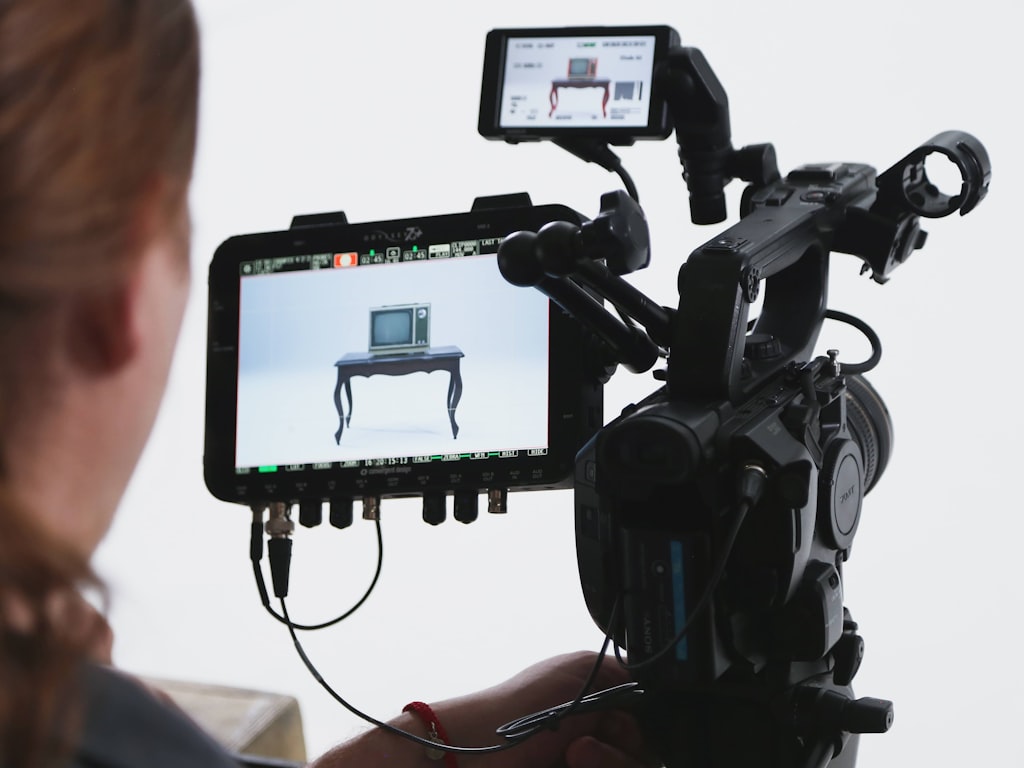
For local testing, the best stack is usually an open model with tunable settings, moderate VRAM requirements, and a turbo or image-to-video mode. If your goal is fast previews, a lightweight open source ai video generation model or image to video open source model can outperform cloud tools simply by removing queue time. Local is where you experiment with prompt structure, reference images, scheduler settings, and negative prompts before spending real money on large-scale renders.
For API apps, convenience and serving optimization matter more. This is where vendors like Together AI are worth watching, especially with their claim of up to 2x faster inference for top open-source models through GPU optimization. You still need to validate the claim against your own prompts and durations, but optimized APIs can accelerate shipping dramatically when you do not want to maintain your own serving layer.
For production scale, infrastructure becomes the deciding factor. GMI Cloud’s claim around Bare Metal NVIDIA H200 clusters, 3.2 Tbps InfiniBand, and 40% speed gains is exactly the kind of signal to care about when you are generating lots of clips, handling long durations, or serving internal teams who all need capacity at once. If your pipeline is memory-bound, high-bandwidth infrastructure will usually beat clever prompt tricks.
A simple decision matrix for speed, quality, and cost
A practical matrix looks like this:
Prototyping / prompt iteration
- Priority: first preview speed
- Best fit: local or low-cost turbo model
- Example: 1-I2V-14B-720P-Turbo at $0.21/video on SiliconFlow
- Why: cheap enough to test often, fast enough to keep momentum
Batch rendering
- Priority: throughput and cost per clip
- Best fit: optimized API or efficient open-source deployment
- Check: batch scheduling, precision support, retries per successful clip
Near-real-time feedback
- Priority: low latency and consistent previews
- Best fit: tools architected for fast inference, such as platforms oriented toward rapid iteration
- Check: first preview time, queue variance, resolution limits
High-end final delivery
- Priority: usability rate and output quality
- Best fit: model with higher hit rate even if slower per render
- Check: total retries, final upscale path, motion stability
Cost still matters. Budget-friendly generators now bundle major options such as Kling O1, Kling 2.6, Runway AI, Hailuo AI, and Veo, as seen in listings like ImagineArt’s model lineup. Multi-model access can be valuable because it lets you match the tool to the phase of work instead of forcing one compromise across the whole pipeline.
If you want the short version: use open-source and turbo variants for cheap fast iteration, optimized APIs for app velocity, and high-bandwidth infrastructure for real production load. Just do not optimize around a model until you confirm the open source ai model license commercial use terms. The fastest stack is useless if you cannot legally ship what it produces.
Conclusion

The fastest AI video inference stack depends on what “fast” means for the job in front of you. If you need the quickest preview, prioritize time to first usable output, local control, and turbo or image-to-video modes. If you need the shortest full render time, pay attention to memory bandwidth, kernel optimization, and whether your platform is solving a memory-bound problem correctly. If you need the fewest retries, pick the model that produces usable clips consistently, even when its raw generation time is longer.
That is the real answer to ai video model inference speed fastest. It is not one winner across every workflow. GMI Cloud’s H200 plus 3.2 Tbps InfiniBand claim shows how much infrastructure can matter. Together AI’s 2x optimization claim shows the serving layer matters too, even if you should verify it independently. Research on Streamlined Inference shows that memory efficiency and speed can improve together without retraining. And real-world comparisons like Pika versus Sora show that creative velocity depends just as much on feedback loops and hit rate as on benchmark charts.
If you compare tools using first preview time, per-step latency, full clip completion, retry count, cost per successful clip, and license fit, you will make better decisions than any headline benchmark can make for you. That is how you find the fastest setup for your actual workflow, not someone else’s demo.