 HappyHorse Model
What Are AI Video Models Trained On? Data Sources, Licensing, and Ethics
If you want to understand how AI video tools work—and what legal and ethical risks may follow—you need to know exactly what ai video model training data can include. That single question affects output quality, originality risk, licensing confidence, and whether a tool makes sense for ads, client work, product demos, or experimental filmmaking. The biggest mistake is assuming every model is trained on the same vague pile of internet clips. In practice, the sources can range from public web video and platform interaction data to licensed film catalogs, creator-submitted footage, and highly specific commercial datasets built for tasks like vehicles or biometrics. Once you see those differences clearly, it becomes much easier to compare vendors, read model cards with a sharper eye, and ask better questions before you commit a workflow to any video generator.
What ai video model training data actually includes

The main data types used to train video models
When people picture training data for video models, they usually imagine raw footage only. The real picture is broader. AI video systems are often trained on combinations of unstructured data such as video clips, still images, audio tracks, transcripts, captions, and text descriptions, sometimes paired with structured metadata such as timestamps, labels, categories, object tags, scene descriptions, camera annotations, or interaction logs. That mix matters because a model needs more than pixels changing over time if it is going to generate clips that align with prompts, preserve motion, and hold together across multiple seconds.
Video itself teaches temporal relationships: what movement looks like, how objects persist across frames, how lighting shifts, and how camera motion changes perspective. Images add visual variety and can reinforce objects, styles, textures, and compositions. Audio can help with lip-sync, scene rhythm, and event timing. Text descriptions and captions connect visuals to language, which is what makes prompt-based generation possible in the first place. Structured metadata then helps the model organize what it sees. A clip tagged “car turning left at night in rain” is much more useful than an unlabeled file named VID_0042.mp4.
Why video models need more than raw footage
This is why ai video model training data is often assembled as a multimodal stack rather than one giant folder of clips. Video training data helps models learn objects, scenes, camera movement, motion patterns, timing, and relationships between visuals and language. If a model is expected to respond accurately to prompts like “tracking shot of a red motorcycle speeding through neon-lit streets,” it benefits from seeing not just motorcycles and neon streets, but examples labeled with motion, color, environment, and cinematography cues.
Specialized dataset providers make this even clearer. Twine’s machine learning video data categories include facial biometrics, long-range biometrics, objects, and vehicles. That tells you something important: some video models are trained on highly targeted datasets built for specific recognition or generation tasks, not just broad web-scale media. A model tuned for surveillance analytics, automotive perception, avatar realism, or sports motion may reflect those underlying categories.
A practical way to evaluate any model is to ask four questions. First, what media types were used: video only, or video plus image, audio, and text? Second, what labels or metadata were attached? Third, was the data broad and internet-scale, or narrow and purpose-built? Fourth, do the categories match your use case? If you need cinematic ad output, a model trained heavily on noisy unlabeled clips may behave very differently from one trained on licensed, high-production-value footage with strong annotations. That framework gives you a useful starting point long before you test prompts.
Where ai video model training data comes from in practice
Public web content, platform data, and licensed libraries
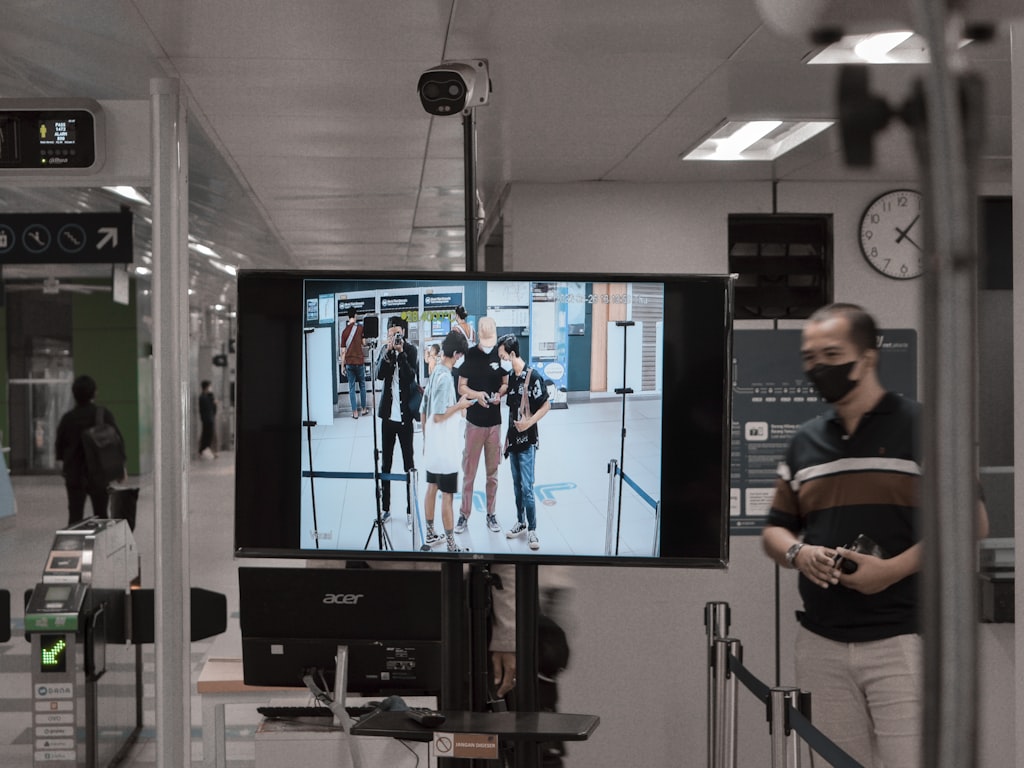
In the real world, training data usually comes from a few repeatable source buckets: public posts on the web, user video interactions on platforms, third-party video libraries, dataset marketplaces, and first-party material collected or created by the company itself. One source discussing Meta’s approach notes the use of public posts, video interactions, and third-party video libraries to improve multimodal models. Those categories are a helpful map because most providers draw from some combination of them, even when their public disclosures are limited.
Public web content offers scale. It can cover huge numbers of scenes, environments, editing styles, and everyday motion patterns at a low acquisition cost. The downside is provenance. Publicly accessible does not automatically mean risk-free to train on, and web media can be messy: weak labels, unknown ownership, compression artifacts, repetitive reposts, and inconsistent quality. Platform interaction data can add useful behavioral signals—what users watch, click, pause, or remix—but it also raises separate questions about consent, terms of service, and whether interaction logs are being used to shape generation systems in ways users actually understand.
Third-party libraries and dataset marketplaces sit in a different category. They can offer stronger documentation, clearer sourcing, and more consistent formatting. Some vendors specifically sell machine learning-ready media, which can reduce the burden of cleaning and labeling. Still, “marketplace” does not automatically mean “fully licensed for every AI use,” so you still need to check whether rights cover model training, derivative systems, and commercial outputs.
Creator-contributed and first-party footage
A more traceable path is creator-contributed or first-party footage. Companies are increasingly exploring deals where creators, publishers, or studios license media for AI training. One notable example from a Reddit r/MachineLearning discussion references a company with roughly 20,000 hours of film and TV content available for licensing. That number matters because it shows how serious the market for licensed training catalogs is becoming. We are no longer talking only about scraped media; we are also looking at a supply chain where rights holders package archives as training assets.
Publisher and creator licensing can be especially attractive when the footage has high production value. One source notes that high-production-value publisher content accounts for most licensed training content in at least one context. That makes sense from a model-quality perspective: clean cinematography, stable framing, better lighting, richer art direction, and reliable metadata can all improve learning.
For practical evaluation, compare each source type on four dimensions: scale, quality, provenance, and legal certainty. Public web data usually wins on scale, often loses on certainty. Licensed film, TV, or publisher footage tends to score higher on quality and provenance, but may be narrower, more expensive, or stylistically skewed. Creator-submitted footage can be a strong middle ground if permissions are clear and categories are broad enough. First-party material offers the most control, but rarely matches the breadth of internet-scale data unless the company already operates a massive media platform. When a vendor says little about sourcing, that silence is itself a signal worth noting.
How to evaluate the quality of ai video model training data
Signals that usually improve model performance
Not all datasets produce the same kind of model, even when the parameter count looks impressive. The training data quality often shows up directly in output stability, motion coherence, prompt accuracy, and style control. Strong video datasets usually have diversity across scenes, subjects, motion types, lighting conditions, camera angles, focal lengths, and environments. They also tend to have better labels, temporal consistency, and cleaner multimodal pairing between video and descriptive text.
Temporal consistency is one of the biggest quality markers for video training. If the source clips are short, choppy, poorly compressed, or full of jump cuts, the model can struggle with object permanence and smooth motion. Better source footage teaches continuity: how a hand remains attached to an arm across frames, how shadows move consistently, how a camera push-in changes depth, or how a running person looks from step to step. Good multimodal pairing matters too. If the associated text accurately describes the action, setting, and style, prompt following gets stronger.
High-quality licensed or publisher footage can improve realism and cinematic consistency because it often contains cleaner shots, richer scene composition, and more reliable annotations than noisy web-scale sources. That does not guarantee better creativity, but it can improve polished output for ads, branded clips, trailers, and social campaigns where visual consistency matters. If you have ever compared a tool that produces smooth camera motion and believable lighting with one that generates generic, jittery clips, training quality is usually part of the reason.
Questions to ask vendors and model providers
A useful checklist starts with source type. Ask whether the dataset is licensed, public-web scraped, creator-submitted, marketplace-sourced, or internally collected. Then ask whether different source types were mixed. Mixed sourcing is common, and it is often where the legal and quality picture gets blurry.
Next, request documentation on dataset sourcing, content categories, consent status, and filtering. Did the provider exclude copyrighted works they lacked rights to use? Did they filter personal, sensitive, or biometric material? Were categories like facial biometrics, long-range biometrics, objects, or vehicles included because the model is tuned for a specific task? If you need brand-safe commercial output, these details matter more than benchmark headlines.
Also ask how the text-video pairs were produced. Were captions human-made, machine-generated, or scraped from surrounding web pages? Weak pairings can hurt prompt reliability. Ask whether the data includes a balance of cinematic footage, user-generated clips, animation, screen recordings, or surveillance-style material. Those mixtures shape the model’s bias toward certain aesthetics and motions.
Finally, inspect the model card or vendor FAQ for specifics rather than slogans. “Trained on diverse video data” is not enough. You want enough detail to judge whether the ai video model training data aligns with your use case and risk tolerance. A provider that can answer clearly on sourcing, licensing, filtering, and content composition is usually much easier to trust in production.
Copyright, fair use, and the legal questions around ai video model training data

What current disputes are about
The legal fight around training data is active, expensive, and unresolved in many places. Congress.gov notes that several dozen lawsuits have been filed by copyright owners alleging that making digital copies of works without permission for AI training can infringe copyright. That is the core of many current disputes: the allegation is not just about outputs that resemble existing works, but about whether the act of copying source material into a training pipeline required permission in the first place.
On the other side, some AI companies argue that training on publicly available internet materials can qualify as fair use. One source quotes OpenAI making that argument and grounding it in long-standing fair use reasoning. That is a serious legal position, but it is not a universal shield, and it has not ended the disputes. Fair use analysis depends on facts, jurisdiction, and how courts weigh purpose, transformation, market effects, and the nature of the copied works.
That is why broad statements like “training on public data is definitely legal” or “all scraped training is definitely illegal” should both be treated carefully. The law remains unsettled across many cases. Different courts may draw different lines, and business users should not confuse a company’s legal theory with a final ruling.
What commercial users should verify before using outputs
For businesses, the most practical issue is separating two questions that are often mixed together. First: do you have rights under the platform’s terms to use the generated output commercially? Second: what do you know about the legality of the underlying training dataset? Those are related, but they are not the same.
A commercial license from the platform is still essential. One source states that businesses can legally use AI-generated video commercially if the platform’s license grants usage rights. So review the terms closely. Check whether commercial use covers ads, client deliverables, social distribution, resale, white-label work, and paid media. Some platforms allow general commercial use but restrict redistribution, stock resale, or use in sensitive categories.
Then go one layer deeper. Even if the platform grants output rights, that does not automatically resolve upstream disputes about the training data. A business can hold a valid license to use outputs while still facing brand, contractual, or risk-management questions if the model is tied to unresolved copyright claims. That does not mean every use is unsafe; it means you should document your decision.
One more wrinkle: output copyrightability can be separate again. A snippet references a D.C. Circuit decision affirming refusal of copyright for AI-generated outputs in a particular context. So if you plan to rely on copyright ownership in generated video, especially without meaningful human authorship, that issue may matter too. The practical move is to keep a simple record: platform terms reviewed, commercial rights confirmed, provider statements on training sources saved, and risk assessed for the intended use. That record is far more useful than relying on marketing copy.
Ethics and transparency: what readers should check before choosing a model
Provenance, consent, and creator compensation
Even when a tool is technically impressive, provenance still matters. You want to know whether the model was trained on licensed content, public web material, creator-contributed footage, first-party platform media, or some mixture of all four. That source map helps you judge not just legal exposure, but how traceable the data pipeline really is. If a vendor cannot explain where the footage came from in broad categories, that is a meaningful gap.
Consent is part of the same picture. For creator-contributed and publisher-licensed data, ask whether permissions were documented and whether contributors agreed specifically to AI training, not just ordinary distribution. For public or platform data, ask what policies govern inclusion, opt-outs, and removal requests. If biometric categories such as facial or long-range biometrics were involved, ask whether those categories were intentionally collected and how they were governed.
Compensation also tells you something useful. Creator licensing and documented permissions are practical signs of a more traceable pipeline. If a provider has actual compensation structures for publishers or creators, that suggests the company has thought through rights acquisition rather than treating data sourcing as a black box.
How transparency affects trust and originality
Transparency also affects originality risk. If you want to reduce the chance of outputs that feel too close to existing works, styles, or recognizable creator patterns, you need some visibility into sourcing. Training sources influence what a model tends to reproduce, imitate, or echo. A model trained heavily on public web media with weak filtering may carry different resemblance risks than one built on narrower licensed corpora with documented curation.
Ask direct questions. Are training data sources disclosed at a category level? Is there an opt-out process for creators? Are contributors compensated once, or through ongoing arrangements? Does the provider filter copyrighted, personal, or sensitive material? Are known artist, studio, or publisher datasets included? If so, under what rights? Has the company published a model card, sourcing statement, or transparency report?
These questions are not abstract. They help you decide whether a model fits your standards for client work, branded content, or internal experimentation. When a provider answers clearly, trust goes up because you can trace the logic of the system. When the answers are vague, your safest assumption is that you are carrying more uncertainty. For teams comparing tools side by side, documented transparency is often a better decision signal than flashy demo reels.
How to choose AI video tools based on training data, licensing, and use case
A buyer checklist for businesses and creators
The easiest way to choose a tool is to treat training data as part of procurement, not just engineering trivia. Start with the use case. Are you making ads, client videos, product explainers, concept shots, social clips, or internal prototypes? A rough ideation tool can tolerate more uncertainty than a model you plan to use for paid campaigns or broadcast deliverables.
Next, review the provider’s training data disclosures. Look for whether the dataset is licensed, web-scraped, creator-submitted, marketplace-sourced, or internally collected. Save screenshots or PDFs of those claims. Then verify platform license terms carefully. Commercial use rights often differ for ads, client work, redistribution, and resale. If you are doing agency or freelance production, check whether the terms let you transfer deliverables to clients. This is where the practical value of ai video model training data becomes obvious: the source story often predicts both output quality and risk profile.
Then assess originality risk. Ask how the provider handles copyrighted material, personal data, style mimicry concerns, and opt-outs. If the model is a black box, reduce stakes or add review steps before publication. Finally, document vendor claims internally so procurement, legal, and creative leads are aligned on what was promised.
What to compare across proprietary and open source options
When comparing proprietary tools with an open source ai video generation model, check four things: documentation depth, model license, commercial-use permissions, and deployment options. Some teams specifically want to run ai video model locally for privacy, latency, cost control, or workflow integration. That can make open models attractive, but local deployment does not erase licensing obligations. You still need to review the model terms and any available provenance information.
This matters if you are researching terms like happyhorse 1.0 ai video generation model open source transformer, open source transformer video model, or image to video open source model. The key question is not just whether weights are downloadable. It is whether the model license allows commercial use, whether attribution is required, whether restricted use clauses apply, and what is known about the training data. Search intent around open source ai model license commercial use usually comes down to this exact issue.
Closed providers may offer stronger indemnities, cleaner user interfaces, and clearer commercial permissions, but they sometimes disclose less about training sources. Open models may give you local control and transparency into architecture, yet still provide limited information about provenance. The best choice depends on your use case: if you need enterprise support and predictable usage rights, proprietary may fit better; if you need experimentation, local deployment, or deep workflow customization, open options may be worth the extra diligence.
The smartest buyers compare both categories using the same lens: training source disclosure, commercial rights, originality safeguards, and operational fit. Once you do that, marketing claims get much easier to sort.
AI video tools make more sense when you judge them through the lens of training data instead of hype. The source mix behind a model shapes how well it handles motion, how cinematic it looks, how much transparency you get, and how much legal uncertainty you may be accepting. If you ask where the data came from, how it was labeled, whether it was licensed, and what rights you actually receive for outputs, you will make better tool decisions fast. That applies whether you are comparing enterprise generators, creator platforms, or an open source video model you want to run locally. The more clearly you understand ai video model training data, the easier it becomes to choose tools with confidence, manage legal risk, and push vendors for the level of transparency serious work demands.