 HappyHorse Model
Temporal Consistency in AI Video: Why Some Models Flicker and How to Reduce It
If an AI video looks amazing when you pause on a single frame but starts feeling fake the second it moves, the problem usually is not raw image quality. It is temporal consistency. That is the layer that makes motion feel connected instead of assembled, and when it breaks, even a beautiful render can flicker, pulse, drift, or morph from frame to frame.
What ai video temporal consistency flickering actually means
The difference between sharp frames and stable motion
A lot of AI clips fail in a very specific way: any one frame looks detailed, cinematic, and ready for a thumbnail, but the sequence doesn’t hold together over time. You get a gorgeous still image every 1/24th of a second, yet the motion feels unstable. That mismatch is the clearest sign that the real problem is temporal consistency, not whether the model can draw a good face or a nice environment.
Temporal consistency is the ability to preserve coherent details, motion, identity, and scene relationships from one frame to the next. If a character’s jawline, eye shape, jacket texture, and lighting direction stay logically connected across adjacent frames, the shot reads as believable. If those details shift a little every frame, your brain instantly notices the instability even when each frame looks “high quality” on its own.
One of the most useful ways to think about it is this: image quality is about what exists within a frame, while temporal consistency is about what survives between frames. A model can excel at the first and still struggle badly at the second. Research and practitioner reports keep pointing to the same issue: flickering often happens because each frame is generated somewhat independently, so textures, lighting, and object details can change unexpectedly instead of being locked over time. That’s the core of ai video temporal consistency flickering.
The visual signs of weak temporal consistency
In practice, the failure modes are pretty recognizable once you know where to look. Flicker is the obvious one: highlights, shadows, skin texture, fabric, or hair seem to shimmer even though nothing in the scene should be changing that quickly. Drift is another common problem, where a face slowly changes structure, clothing patterns crawl, or a background object shifts position in a way the camera movement doesn’t justify. Morphing shows up when hands, eyes, mouths, or props subtly re-form from frame to frame. You can also get pulsing brightness, where shadows or darker regions seem to breathe in exposure. QuestStudio’s description of temporal inconsistency lines up well with what we all see in bad outputs: flicker, drift, morphing, and even accidental scene changes when continuity breaks.
There is also a more destructive version where the scene itself mutates. A wall texture becomes foliage, a doorway changes width, or a prop swaps shape between frames. These are not compression problems. They are continuity failures. Temporal contiguity matters because believable video depends on stable relationships across time. If the character-to-background spacing, lighting logic, and object identity stay coherent, the shot feels grounded. If those relationships wobble, viewers stop reading motion and start noticing generation errors.
That is why stable motion matters more than isolated visual wow-factor. A frame can impress the eye. Temporal consistency earns trust from frame one to frame one hundred.
Why some ai video models flicker more than others

Frame independence vs temporally aware generation
The biggest reason some models flicker more than others is simple: they are built to optimize frame quality more than cross-frame coherence. When the model treats each frame too independently, you get strong single-frame detail but weak continuity. Hair strands change pattern, pores blink in and out, shadows shift intensity, and background textures rewrite themselves. The result is motion that looks nervous instead of natural.
This is why newer systems that advertise temporal consistency processing usually feel more stable. According to reporting on AI video quality trends, newer pipelines are reducing choppiness by adding processing specifically meant to keep details stable over time. That extra layer matters because motion is not just a sequence of images. It is a chain of dependencies. If frame 12 does not honor what happened in frame 11, the illusion cracks.
Older or simpler pipelines often rely on image-first generation with weak temporal guidance added later, or with interpolation used as a patch. That can work for simple shots, but it breaks faster once movement gets complex. A locked-off portrait with minimal background detail can survive weak temporal logic longer than a handheld move through a textured street scene. Once the model has to preserve identity, camera motion, lighting continuity, and object relationships all at once, the gaps show up.
Where interpolation and motion processing break down
Motion-heavy shots expose weaknesses quickly. Fast pans, swaying hair, moving hands, layered backgrounds, reflections, and cast shadows all create more opportunities for frame-to-frame disagreement. Slow-motion conversion and frame interpolation can also reveal problems that were less visible at native speed. A TopazLabs user report described pulsating brightness in shadows during slow-motion conversion, and the important detail was that the effect appeared even in natural light footage. That tells you the issue was not simply “bad lighting” on set. It was temporal instability showing up as brightness variation in darker regions.
Another practitioner report around frame interpolation pointed to a failure during the frame-rate doubling step, especially during panning along the ground. That example is incredibly useful because ground pans are full of dense texture, parallax, and repeating detail. If a model or interpolation engine cannot track that detail consistently, it starts inventing micro-variations from frame to frame. The eye reads that instantly as shimmer or crawl.
Shadows are another classic stress test. They often contain softer gradients and lower contrast detail, so when a pipeline guesses motion or brightness inconsistently, you get pulsing that feels like the light source is flickering even when it should be stable. High-detail textures such as grass, brick, fabric weave, and hair produce similar problems because there are so many tiny details to preserve.
When you compare models, this is where the modern systems usually separate themselves. The stronger ones do not just make prettier frames. They keep identity stable, preserve clothing and environment details through movement, and maintain lighting continuity under camera motion. That is the practical difference between a model that demos well in stills and one that survives real production work.
How to diagnose ai video temporal consistency flickering in your clips
A quick review checklist before exporting
Before you render finals or start editing around a problem shot, do a manual temporal pass. Frame stepping catches issues that normal playback hides. Start with the face, because identity drift shows up there first. Check eyes for size changes, eyelid shape shifts, iris movement that does not match head motion, and lashes that appear or disappear. Then inspect the mouth and jawline for subtle re-sculpting across adjacent frames.
Next, go straight to hands. If a model is unstable, fingers will often morph before anything else. After that, inspect hair edges, clothing folds, repeating patterns, jewelry, glasses, and any object touching the character. Then shift attention to background anchors: lamp posts, door frames, wall textures, windows, and horizon lines. These fixed references make drift obvious. If those elements crawl, bend, or rewrite while the camera move stays smooth, the issue is temporal instability.
Shadows deserve their own pass. Look for pulsing brightness in darker areas, especially if the clip includes slow motion, interpolation, or relighting. The TopazLabs reports are a good reminder that shadow problems can show up even in footage that seems otherwise clean. Also watch the edges of moving subjects against the background. Temporal inconsistency often appears there as edge shimmer or contour breathing.
How to tell flicker from compression or bad prompting
A lot of people misdiagnose ai video temporal consistency flickering as compression, export settings, or a weak prompt. Compression artifacts usually break the image in blocky, smeared, or mosquito-noise patterns, especially in flat gradients and high-motion areas. Temporal inconsistency is different. The same detail actually changes shape, texture, or brightness across adjacent frames. A shirt stripe is not just blurred; it shifts position or redraws itself. A cheek shadow does not merely band; it pulses brighter and darker in a way that feels generated rather than encoded.
To separate prompting issues from temporal ones, ask whether the design itself is unstable or whether the motion is unstable. If the prompt created a weird hand in every frame, that is a design problem. If the hand looks acceptable in isolated frames but changes anatomy every few frames, that is temporal inconsistency. The same logic applies to faces, props, and backgrounds.
Reviewing at 25% or 50% speed helps a lot. Frame stepping is even better. Move one frame at a time and focus on a single feature: a pupil, collar edge, hair silhouette, or shadow boundary. If it jumps when it should glide, you found the problem. Also review before post-production starts. Editors lose time when they begin cutting, color, or compositing on top of unstable source clips, because later fixes become more expensive and more localized.
A good habit is to mark exact trouble ranges with timecode notes. For example: “00:03:12–00:03:20 left eye drift,” “00:05:01–00:05:08 background brick shimmer,” or “00:06:10–00:06:14 shadow pulsing under chin.” That gives you a surgical map instead of a vague feeling that the clip is “off.”
Best workflows to reduce ai video temporal consistency flickering before generation
Prompting and shot design for stable results
The best fix is usually prevention. Start by choosing tools that explicitly prioritize temporal consistency instead of just showing attractive stills in marketing examples. If a model looks incredible on paused frames but nobody shows long, continuous shots with stable identity and lighting, assume you need to test hard before trusting it.
Keep early shots simple. A neutral pose, direct camera angle, clean silhouette, and controlled background make it easier to lock the core design before you ask the model to handle action. One of the most reliable consistency workflows is to establish the visual DNA first: simple background, stable face angle, neutral pose, and clear clothing shapes. Once those are holding together, then add motion, camera movement, props, and environment complexity.
Prompt with continuity in mind. Specify stable wardrobe, fixed lighting direction, and camera behavior that the model can preserve. Instead of jumping straight to “dramatic handheld sprint through neon rain with windblown hair,” prove the character works in a locked medium shot first. If the model cannot maintain the face and jacket in a calm setup, it will not survive the hard version.
Character and scene consistency workflows that work
A practical workflow that keeps paying off is generating reference images first, then feeding those into video generation. That approach was echoed by Stable Diffusion users trying to keep characters consistent: build the face and look in images, then use those references inside the video pipeline so identity has something concrete to anchor to. This is especially useful for recurring characters, branded talent, or multi-shot sequences where facial consistency matters more than maximum novelty.
For longer sequences, extend from the last stable frame only after checking that the final frame is still coherent. That sounds basic, but it avoids compounding drift. If the ending frame of clip A already has a slightly altered nose shape, hairline, or costume pattern, clip B inherits the error and often amplifies it. Verifying the handoff frame before extension can save an entire sequence.
Background complexity also matters. Busy environments with patterned walls, foliage, crowds, or reflective surfaces multiply opportunities for flicker. Start with simpler backdrops, then iterate upward. If a scene needs complexity, add it after you know the subject can remain stable. Camera movement should follow the same rule. Static or slow controlled movement usually beats aggressive pans when your main goal is continuity.
This is also where controlled testing helps if you use an open source ai video generation model, an image to video open source model, or an open source transformer video model. If you can run ai video model locally, you gain repeatability: same prompt, same seed, same source references, same motion path. That makes it much easier to isolate what actually improves temporal stability. Even niche searches around a happyhorse 1.0 ai video generation model open source transformer setup fit into this mindset: the point is not trend-chasing, it is building a pipeline you can test and reproduce shot after shot.
Fixing ai video temporal consistency flickering in post-production
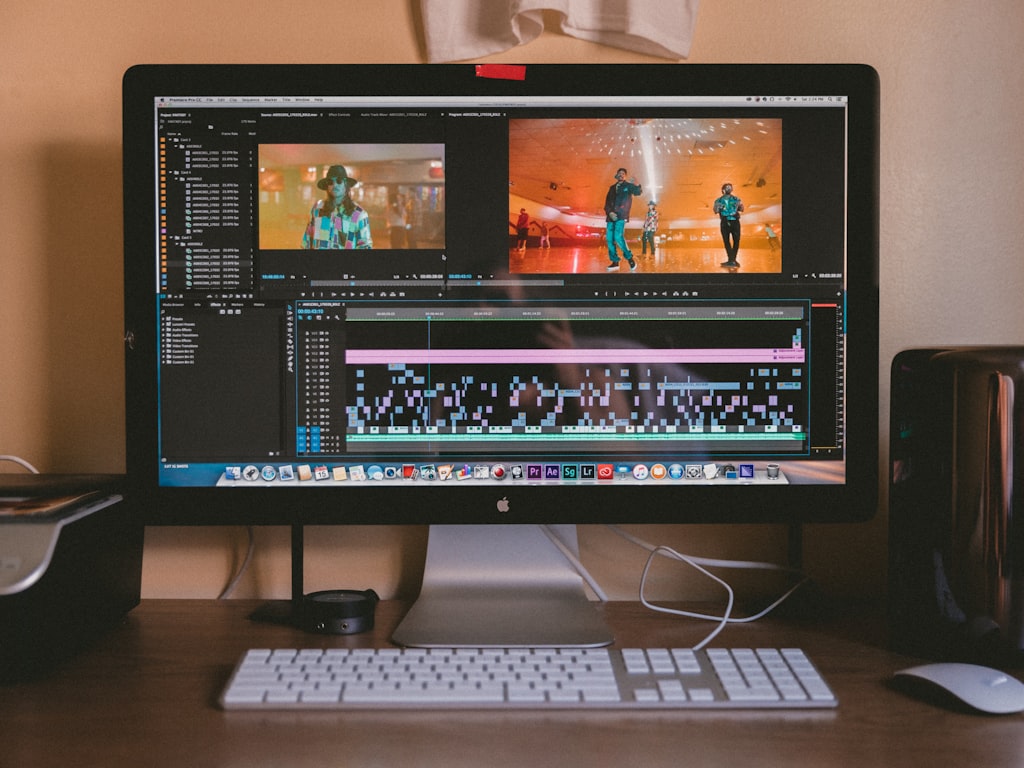
When stabilization and interpolation help
Once a clip is generated, post can absolutely help, but only if you target the real failure zones. Start by identifying unstable regions instead of applying a blanket fix to the whole frame. If only the face flickers, treat the face. If the issue is isolated to a shadowed wall during a pan, work there. Global fixes often soften the entire image or introduce new artifacts in areas that were already stable.
Temporal stabilization tools built specifically for AI video are becoming more useful here. Practitioners have discussed ComfyUI-based temporal stabilization engines designed to reduce AI-video flicker, including a free v8.9 beta in one build shared publicly. Tools like that can smooth frame-to-frame variation by reinforcing consistency across a sequence instead of only stabilizing camera position. That distinction matters. Camera stabilization and temporal stabilization are not the same thing.
Interpolation can help when motion is already coherent but uneven. If your clip is basically stable and just needs smoother cadence, adding intermediate frames may improve perceived motion. But interpolation can also make flicker worse when the underlying frames disagree too much. The TopazLabs user reports are a good warning: shadow brightness pulsing and frame-rate doubling failures during ground pans show how interpolation can magnify instability in exactly the places where temporal logic is weak.
A practical cleanup pass for editors
A solid cleanup pass usually follows this order. First, mark the unstable ranges and isolate the regions involved: face, hands, background textures, shadows, edges, or reflective surfaces. Second, test a temporal stabilization pass on a very short segment, usually 2 to 5 seconds. Third, compare before and after by frame stepping, not just real-time playback. If the shimmer is gone but the details now smear or ghost, you traded one artifact for another.
For shadow pulsing, try color and luminance-targeted correction before broader interpolation. Since users have reported different behavior across log and Rec.709 source formats, it is worth checking whether color pipeline choices are exaggerating the instability. Sometimes a pulsing shadow gets worse after contrast transforms or LUT application because small frame-to-frame variations become more visible.
For facial drift or local morphing, selective masks and patch-based cleanup often work better than full-frame processing. If only the eyes and mouth are unstable, a targeted temporal pass there can preserve more of the original sharpness elsewhere. For backgrounds, blending from neighboring stable frames can help in short stretches, especially when the camera move is modest.
Always test short segments first. Do not commit an entire timeline to one fix because a 3-second improvement does not guarantee a 30-second result. Compare normal playback, slow playback, and frame stepping. If the output looks smoother in motion but creates warping in the shadows or crawling in textures, the fix is not done yet. The goal is not merely softer motion. The goal is a shot that stays logically coherent over time.
How to choose better models and tools for ai video temporal consistency flickering problems
What to compare before you commit to a pipeline
When choosing a model, compare it like a motion tool, not just an image generator. Identity stability should be near the top of the list. Does the face stay recognizably the same over 5, 10, or 20 seconds? Then check background persistence. Do walls, windows, props, and textures remain consistent, or do they slowly rewrite themselves? After that, look at lighting continuity. Watch shadows, highlights, and skin tones for frame-to-frame pulsing.
Camera motion handling is another major filter. A model that looks solid in static compositions may collapse during pans, dolly moves, or parallax-heavy scenes. Test longer clips too, because some systems start strong and drift later. That longer-horizon behavior is one of the best indicators of whether a model really has temporal awareness or is simply getting lucky in short bursts.
To compare fairly, use the same prompt, same seed, same reference image, and same motion scenario across models. Otherwise you are not measuring temporal behavior. You are just comparing random outputs. A controlled test might be one talking-head clip, one lateral pan across textured ground, one shadow-heavy scene, and one medium-action character shot. That set exposes a lot of the usual failure points fast.
Questions to ask when evaluating open source video models
If you are evaluating an open source ai video generation model, an image to video open source model, or an open source transformer video model, ask practical questions before adopting it. Can you run ai video model locally with enough control over seeds, frame count, motion settings, and reference conditioning to reproduce results? Does the documentation mention temporal modules, consistency processing, or sequence-aware generation? Are there community examples showing real uninterrupted clips rather than cherry-picked stills?
Licensing matters too. Check the open source ai model license commercial use terms before you commit a model to client or production work. “Open source” does not automatically mean unrestricted commercial deployment. Also scan issue trackers, Discord examples, and user reports for recurring complaints about identity drift, background shimmer, or interpolation instability. Those are usually more revealing than polished launch demos.
If a model is being discussed in niche terms like happyhorse 1.0 ai video generation model open source transformer, do the same diligence you would for a bigger release. Look for raw output samples, consistency tests, and evidence that it holds up under controlled prompts. A flashy image sample tells you almost nothing about temporal behavior. A boring 10-second test clip with stable identity, stable lighting, and clean background continuity tells you almost everything.
The strongest pipeline is usually not the one with the most dramatic single frame. It is the one that keeps faces, textures, shadows, and scene geometry coherent over time. That is what makes a shot usable.
Conclusion
The AI video that feels best is usually not the one with the prettiest isolated frame. It is the one that stays coherent from start to finish. When motion holds together, viewers stop scanning for errors and start following the scene.
So keep the priorities simple. First, choose models that are genuinely temporally aware and test them with controlled scenarios. Second, design shots for stability by locking character identity, backgrounds, and motion complexity in stages. Third, use post-production as a targeted cleanup tool, not a magic rescue for fundamentally unstable generation.
That order saves time, preserves quality, and leads to clips that actually survive playback instead of only surviving screenshots.