 HappyHorse Model
HappyHorse Image-to-Video: How It Achieves 1391 Elo
If you want to understand why happyhorse image to video i2v is getting so much attention, the fastest path is to look at what the 1391 Elo claim means in practice, how the workflow works, and how to get better results from your own image inputs.
What HappyHorse Image-to-Video I2V Is and Why the 1391 Elo Claim Matters
HappyHorse 1.0 at a glance
HappyHorse 1.0 is showing up across multiple third-party pages as an AI video generation model built for both text-to-video and image-to-video creation. The most consistent product description across snippets from WaveSpeedAI, Cutout.pro, and Dzine AI is simple: you can either type a prompt or upload a reference image, then generate video with the same underlying system. That matters because a lot of creators don’t want separate tools for concept ideation and controlled animation. A model that handles both T2V and I2V in one place can speed up testing fast.
Some sources go further and position HappyHorse as cinematic and realistic, with especially strong motion quality. One snippet even calls it the “world’s #1 AI video generator” and says it beats Seedance 2.0, while Dzine AI labels HappyHorse 1.0 as the #1 ranked AI video generator. Those are big claims, and they line up with why the model is gaining traction among people trying to generate cleaner movement instead of just pretty still frames with weak temporal consistency.
Another source describes HappyHorse as an open-source AI video generation model with joint audio-video generation plus support for T2V and I2V. That puts it into the same search territory as terms like open source ai video generation model, image to video open source model, and open source transformer video model. If you care about flexibility, adaptation, or the possibility to run ai video model locally, that positioning is worth checking closely before you commit to a production workflow.
What an Elo-style ranking usually tells you
The 1391 Elo number is the attention magnet here. In practice, an Elo-style score usually means preference ranking rather than a raw technical metric like FVD, CLIP, or a latency benchmark. When AI video tools are discussed in leaderboard form, Elo often reflects comparative judgments: one output is preferred over another, and rankings shift based on repeated pairwise evaluations. That makes Elo useful for understanding perceived quality, but only if you know the evaluation protocol.
That’s the caution point with HappyHorse. The supplied research says HappyHorse has a reported Elo score of 1391, but the snippets do not include the actual leaderboard table, benchmark dataset, judge setup, or scorer details needed to independently verify how that number was produced. So the safest interpretation is this: 1391 Elo is a strong signal that the model is being seen as highly competitive in overall preference or quality discussions, but it is not a fully transparent technical benchmark from the material currently available.
That distinction matters when you’re choosing a model for real work. If your goal is realistic short-form ads, cinematic concept clips, portrait animation, or motion-heavy image-based sequences, a high Elo-style ranking can still be useful because it suggests people repeatedly prefer the outputs. But you should use it as a directional quality signal, not as proof that the model wins every test category.
The practical takeaway is straightforward. If a model is repeatedly described as top ranked, strong on motion, and capable of cinematic realism, it deserves testing in your own workflow. For creators comparing tools, that makes HappyHorse worth trying when motion quality and visual appeal matter more than exhaustive benchmark transparency. That is the real value behind the 1391 Elo discussion.
How HappyHorse Image-to-Video I2V Works in a Simple Workflow

The basic generation flow
The clearest workflow description in the research comes from Dzine AI’s snippet, and it’s refreshingly simple. You open the AI video generator, then choose whether to start with a text prompt or upload a reference image. After that, you generate using HappyHorse 1.0. For anyone trying image-to-video the first time, that means the on-ramp appears to be browser-based and straightforward rather than requiring a complicated install or local inference stack.
That simple flow is useful because it lets you move quickly between concept creation and controlled animation. If you already have a product photo, character portrait, key art frame, or social creative, image upload is the fastest way to test whether the model can preserve composition and identity while adding motion. If you’re still exploring the concept itself, text prompting gives you a faster route to generate scene ideas before you commit to a visual reference.
For practical use, start by matching your source material to your goal. If you have a locked campaign visual, upload that image first. If you’re still exploring different looks, camera moods, or environments, prompt your way into a base idea and only move to image-to-video once you find a direction that is worth stabilizing.
Text-to-video and image-to-video in one system
One of the more important details in the source material is the unified pipeline description from WaveSpeedAI. That suggests HappyHorse uses one system to handle both text-to-video and image-to-video rather than treating them as disconnected products. From a creator’s point of view, that’s a huge usability advantage. It reduces tool switching, keeps your experiments more comparable, and makes it easier to move from rough ideation to tighter control without changing model families.
The unified-pipeline idea also helps explain why happyhorse image to video i2v is appealing for iterative work. You can test a concept in text-to-video, identify a promising composition or scene feel, then use a chosen frame or external reference image to push toward consistency. That is often the fastest way to combine exploration with control. Instead of deciding upfront whether you are “doing T2V” or “doing I2V,” you can use both modes as parts of the same generation loop.
When deciding where to start, use a simple rule. Start from text if you need variety, surprise, and broad concept exploration. Start from image if you care more about subject identity, framing, product details, costume continuity, or a precise visual anchor. Portraits, product demos, and branded social content usually benefit from I2V first. Worldbuilding concepts, cinematic moodboards, and speculative scene ideation often benefit from T2V first.
One important constraint from the research: the available sources do not confirm advanced controls such as seed settings, motion sliders, exact resolution presets, clip length controls, aspect ratio options, API parameters, or local deployment commands. So if those controls matter to your workflow, verify them directly in the tool interface before you plan around them. Don’t assume the platform supports knobs that aren’t explicitly documented. That one verification step can save a lot of rework later.
How to Get Better Results With HappyHorse Image-to-Video I2V Inputs

Why source image quality matters
The strongest practical tip in the research comes from Cutout.pro, and it’s one I’ve seen hold true across nearly every image-to-video workflow: I2V models amplify flaws in the source image into visible flicker, unstable edges, and motion artifacts. If the input image already has jagged cutout lines, compression blocks, haloing around hair, or weak subject separation, animation makes those defects easier to notice, not easier to hide.
That matters even more when you’re trying to squeeze premium-looking motion out of a single still. The model has to infer movement, fill temporal gaps, and maintain coherence from a static starting point. If your source frame is noisy or messy, the model spends capacity trying to resolve ambiguity instead of producing clean motion. In practice, that often shows up as shimmering outlines, wobbling accessories, drifting facial details, or background fragments moving when they should stay still.
For portraits, this means flyaway hair, glasses rims, earrings, and jawline edges need to be clean before generation. For character art, armor edges, props, fingers, and layered clothing should be readable and separated well from the background. For product shots, labels, packaging edges, reflective surfaces, and shadow transitions should be as crisp as possible. For social content, where viewers often see compressed videos on repeat, rough source edges can become glaring once the clip starts moving.
How to prepare images before generation
The highest-impact preparation step is cleanup. Start with the highest-quality version of the image you have, ideally before social compression or repeated export. If the image has obvious JPEG artifacts, blurry edges, or rough masking, fix those before you upload. A clean source gives the model a better structure to animate and usually reduces the kind of edge jitter that makes an otherwise good clip feel synthetic.
If you’re using a cutout, inspect the border closely at 200% zoom. Hair should not have a harsh paper-doll edge, product corners should not have transparent remnants, and clothing contours should not have visible chop marks. Remove halos, repair missing edge pixels, and smooth any uneven masks. If the subject blends into a busy background, separate it more clearly or simplify the backdrop. Messy backgrounds create ambiguity, and ambiguity often turns into unstable motion.
A few practical prep moves go a long way:
- sharpen only lightly so edges remain natural rather than crunchy
- reduce background clutter if the subject is the main focus
- correct obvious color noise in dark areas
- remove accidental duplicate contours from rough masking
- keep the subject large enough in frame that key details stay readable
For believable animation, framing matters too. If the image crops the head too tightly, clips off hands, or places the product against a chaotic environment, motion can feel constrained or error-prone. A little breathing room around the subject usually helps.
The quickest way to improve happyhorse image to video i2v output is not a clever prompt trick. It’s feeding the model a cleaner, more stable image. If you do one thing before generation, do that. A polished source image often produces a bigger quality jump than any wording tweak after the fact.
Why HappyHorse 1.0 Stands Out Among Open Source AI Video Generation Models
Open-source positioning
Part of the buzz around HappyHorse comes from how some sources position it: not just as a high-ranked generator, but as an open-source AI video generation model with joint audio-video generation and support for both T2V and I2V. That combination is attractive because it covers the three things many builders actually care about: strong outputs, multiple generation modes, and the possibility of deeper control than a closed black-box web app usually allows.
That positioning also places it close to several adjacent search intents: open source ai video generation model, image to video open source model, and open source transformer video model. Those searches usually come from people who want more than one-click novelty. They want flexibility in how they test prompts, adapt workflows, compare architectures, and potentially integrate generation into existing creative pipelines. If HappyHorse 1.0 really sits in that lane, it becomes interesting not only for end users but also for teams prototyping around video generation systems.
There’s another reason this matters. Open or open-model positioning can make experimentation cheaper and faster over time. If you can inspect documentation, understand model constraints, or explore deployment paths, you gain more control over repeatability and workflow design. For creators doing high-volume ad variants, product loops, character iterations, or internal R&D, that can be more valuable than a flashy homepage claim.
The related keyword phrase happyhorse 1.0 ai video generation model open source transformer fits this exact curiosity: people want to know whether the model is part of the broader shift toward transformer-based video generation that is not locked behind a completely opaque commercial layer. Even when full technical details are not immediately visible, that framing increases interest.
What users may want to verify before adoption
At the same time, this is where practical verification matters most. The supplied research does not provide definitive licensing terms, commercial-use rights, package structure, hardware requirements, or setup details for local deployment. So before you build around any “open-source” label, confirm the actual license, repo status, usage restrictions, and deployment instructions directly from the official source.
That means checking whether the model truly supports commercial work, what the open source ai model license commercial use terms say, and whether there are limits on redistribution, fine-tuning, hosted usage, or derivative products. If your plan is to run ai video model locally, verify whether local inference is actually supported, what VRAM requirements are involved, and whether audio-video generation is available in that setup or only through a hosted interface.
Also verify what “open” means in practice. Sometimes weights are available but training code is not. Sometimes inference is public but commercial rights are limited. Sometimes a hosted platform uses the model while keeping advanced deployment details private. Those differences are not minor when you’re planning production workflows.
HappyHorse stands out because the positioning combines ranking momentum with open-model appeal. Just make sure the operational details match your needs before you commit time, budget, or client delivery promises to it.
HappyHorse Image-to-Video I2V vs Text-to-Video: When to Use Each Mode
Best use cases for image-to-video
Image-to-video is the stronger starting point when control matters more than surprise. If you need a specific character to stay recognizable, a product package to remain brand-accurate, or a portrait to preserve the original subject, I2V usually gives you the tighter anchor. A reference image locks in identity, composition, and a lot of the visual language that text-only prompting would otherwise keep fluid.
That makes I2V especially useful for product marketing, creator branding, character animation, fashion previews, and social edits built around an existing hero image. If you already have a campaign still or a polished piece of concept art, using happyhorse image to video i2v can help turn that static asset into motion content without starting over from scratch. The model is still interpreting motion, but it has a strong visual reference to protect.
Use I2V when continuity is a priority. If you need the same face, outfit, color palette, framing, or object geometry to remain stable, a source image gives you a much stronger foundation than an abstract text prompt. This is also the better route when stakeholders have already approved a visual and don’t want a model inventing a new one.
When text-to-video is the better starting point
Text-to-video is usually better for ideation. If your goal is to explore multiple scenes, camera moods, environments, or cinematic concepts without being locked to a fixed reference, T2V is faster and more flexible. You can test broad prompt directions, discover visual ideas you didn’t already have, and generate concept candidates before you worry about consistency.
This is where the unified pipeline framing becomes practical instead of theoretical. Start in T2V when you need creative range. Once you get a concept worth keeping, move into I2V if you want to stabilize identity or recreate a chosen look with more control. That back-and-forth is often the smartest workflow, especially when a project starts as exploration and later becomes execution.
A quick comparison checklist helps before generation:
- do you already have a strong reference image
- do you need continuity for a character, product, or brand asset
- is motion quality the main priority, or is concept variety more important
- do you need exact framing, or are you still open to discovering composition
- are you trying to animate a known visual, or invent a new one
If you answer yes to reference image and continuity, start with I2V. If you answer yes to concept discovery and variety, start with T2V. Then switch modes as needed. The advantage of one system handling both is that you don’t have to choose one forever. You choose based on the phase of the project.
A Practical Checklist for Using HappyHorse Image-to-Video I2V Before You Generate
What to confirm in the product interface
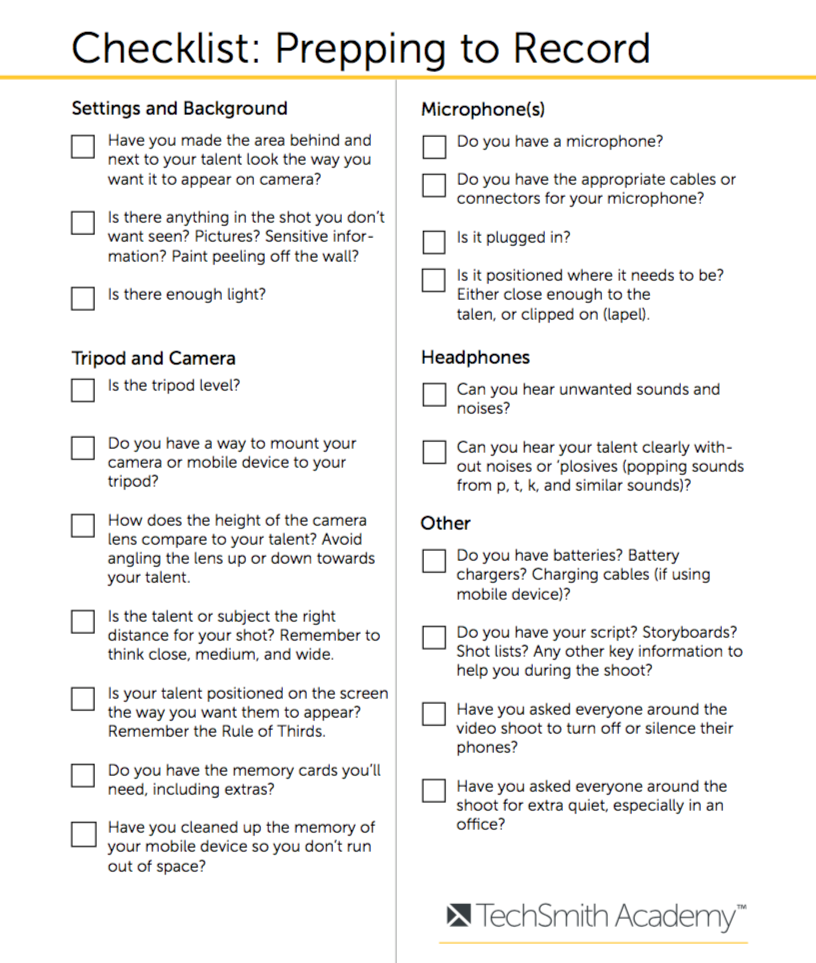
Before you commit to a workflow, confirm the basics inside the actual platform interface. The research supports a simple browser-style flow, but it does not document every operational detail. First, make sure the tool you’re using actually supports image upload for I2V and not just prompt-based generation. Then confirm whether prompt input can be combined with the uploaded image, because that affects how much direction you can add during generation.
Next, check commercial usage terms. One supplied snippet suggests paid plans may allow clips to be used for ads, client projects, and monetized social content, but you should verify that directly in the current product environment. If you’re creating for clients or paid campaigns, don’t rely on a summary page alone. Confirm whether your subscription tier includes the rights you need.
Also look for export and audio options. Since one source describes HappyHorse as supporting joint audio-video generation, check whether that capability is available in the interface you’re using or only referenced elsewhere. If audio matters to your workflow, confirm whether it is generated automatically, optional, downloadable, or absent in the specific product implementation.
Finally, verify any missing operational details the research does not confirm: clip length, aspect ratios, output resolution, queue speed, watermark behavior, and whether local run options exist. If you’re evaluating it as an image to video open source model or exploring whether you can run ai video model locally, go straight to the official documentation or repository rather than assuming hosted features reflect local ones.
What to measure after generation
Once you generate, judge the output against the same quality signals implied by the ranking claims. Look at realism first: do surfaces, faces, and object edges hold together under motion? Then check cinematic feel: does the clip have coherent movement and visual polish, or does it feel like a still image being stretched? Motion smoothness matters most in these comparisons, especially if the model’s reputation is built on being top ranked.
Subject consistency is the next test. In I2V, the uploaded reference should remain recognizable throughout the clip. Watch for identity drift, shifting proportions, edge shimmer, and accidental background movement. In T2V, compare whether the model gives you stronger atmosphere and concept breadth, even if continuity is looser. Running the same idea through both modes is one of the best ways to evaluate the unified pipeline claim in practice.
A useful testing method is simple:
- pick one concept
- generate it once with text-to-video
- generate it again with image-to-video using a strong reference
- compare motion stability, subject consistency, realism, and artifact levels
- note which mode gets you closer to your actual production goal
Keep expectations grounded where documentation is incomplete. Verify clip duration, export dimensions, commercial rights, and local deployment details in the actual product environment, not from unconfirmed summaries. If the model is as strong as the reported 1391 Elo buzz suggests, that strength should show up visibly in side-by-side tests. The best proof is still the clip you can generate, inspect, and reuse confidently.
Conclusion

HappyHorse 1.0 is getting attention for a reason. The available research consistently points to a model that supports both text-to-video and image-to-video, is repeatedly described as top ranked, and is associated with realistic, cinematic output and strong motion quality. The reported 1391 Elo should be read as a strong signal of perceived quality and market traction, even though the supplied material does not include full leaderboard methodology.
Where the model becomes especially practical is the workflow. Open the generator, choose prompt input or upload a reference image, and generate from one unified system. That makes it easy to move between exploration and control without swapping tools. For many projects, that flexibility is more valuable than a long feature list on paper.
The biggest performance lever on the user side is input quality. Cleaner images, better edges, and stronger subject separation usually lead to smoother motion and fewer distracting artifacts. If you want better results from happyhorse image to video i2v, spend time polishing the source image before you render.
And if you’re interested in the open-model angle, verify the real details before adopting it deeply: license, commercial-use rights, deployment options, and whether local workflows are genuinely supported. Do that, pair it with disciplined side-by-side testing, and HappyHorse becomes much easier to evaluate on what actually matters: the quality of the video you can produce reliably.