 HappyHorse Model
HappyHorse vs Kling 3.0: Head-to-Head AI Video Comparison
If you're deciding between HappyHorse and Kling 3.0, the fastest way to choose is to compare them by workflow, realism, lip-sync, motion control, and total value for the type of videos you actually need to make.
HappyHorse vs Kling 3.0 at a Glance: Which Tool Fits Your Video Workflow?
Quick verdict by use case
For fast talking-head videos, spokesperson clips, and influencer-style ads, Kling 3.0 starts with an edge because Kling 2.6 already built a reputation for strong speech, lip-sync, and ad-friendly output. One Reddit discussion around the release noted that Kling 2.6 was seen as “one of the best right now” for talking-head videos, influencer ads, and lip-sync, even while users also described it as higher cost with mixed opinions. That matters, because 3.0 inherits expectations from a version that was already getting used for practical marketing work rather than just flashy demo reels.
For cinematic single shots, dramatic camera moves, and realism-first clips, Kling 3.0 is also the safer first test. Review coverage is explicitly framing the model around realism, camera movement, and emotional expressiveness, including a YouTube review titled “Kling 3.0 Review: Realism, Camera Moves, and Emotion Tested,” with an opening timestamp labeled “This Almost Fooled Me.” When reviewers lead with that kind of framing, it usually means the model is getting judged on whether footage can pass the quick-scroll “almost real” test.
HappyHorse makes more sense to test if your workflow is driven by budget, access, experimentation, or broader interest in flexible tooling. If you care about terms like happyhorse 1.0 ai video generation model open source transformer, open source ai video generation model, open source transformer video model, or image to video open source model, the key question is whether HappyHorse fits a more controllable or lower-friction setup than a premium hosted generator. If your priority is to run ai video model locally or evaluate an open source ai model license commercial use, workflow fit can matter more than headline quality.
What makes Kling 3.0 stand out right now
Kling 3.0 has real momentum. One Reddit post complained there were “too many Reddit posts” about Kling 3.0 showing up within days, which is actually a useful signal: creators are testing it aggressively. Another comparison snippet says “Kling 3.0 AI Video Generator might be a bit more popular than HappyHorse AI” and cites 122.0K monthly traffic for Kling 3.0 AI Video Generator. That does not prove it is better, but it does show where attention is concentrating.
The easiest side-by-side framework is to test five categories with the same character and prompt style: talking-head videos, influencer ads, lip-sync clips, cinematic shots, and experimental multi-shot scenes. For each category, check three things only: output quality, control, and cost per usable result. That prevents you from getting distracted by one amazing generation that took ten retries and a huge credit burn.
Kling is also being benchmarked alongside models like Sora 2 Pro, Veo 3.1, and Grok Imagine in current AI video comparisons, which tells you it is being treated as a top-tier model rather than a niche option. My practical recommendation is simple: before you commit your budget or production workflow, run identical short prompts in both tools and score quality, prompt obedience, and retry rate. That gives you a much clearer answer than any homepage demo.
Video Quality in HappyHorse vs Kling 3.0: Realism, Emotion, and Camera Movement
How to judge realism in a test prompt
If you want a clean video quality test, use a short prompt with a human subject, visible hands, a medium camera move, and one emotional beat. Kling 3.0 is already being actively reviewed on realism, camera movement, and emotional expressiveness, so those are the exact areas worth stress-testing first. A good benchmark prompt is something like: A woman in a soft-lit café looks up from her coffee, smiles with relief, then turns toward the window as the camera slowly pushes in. That single shot reveals facial detail, body coherence, eye-line control, lighting consistency, and transition stability.
When comparing HappyHorse and Kling 3.0, freeze-frame key moments. Check whether the face stays structurally consistent from start to finish, whether the shoulders and torso move in a believable way, and whether the scene layout drifts. If a frame looks great but the subject’s jawline changes, fingers fuse, or clothing texture mutates during motion, the clip is not truly production-ready.
A useful realism test is the “almost real” rule. Watch each clip once at full speed with no pausing and ask whether it could briefly pass as real footage while scrolling. The Kling 3.0 review coverage leaning on “This Almost Fooled Me” is important because that is exactly the threshold most ad creatives and short-form video buyers care about.
What to look for in camera motion and emotional performance
For camera motion, use the same movement across both tools: slow pan, slight dolly-in, and a subject turn. You are looking for smooth pans, stable subject tracking, and no weird warping around the face or background edges. If the camera is supposed to move left but the environment stretches or the character jitters, the model is fighting the instruction instead of executing it.
For emotion, prompt a clear shift rather than a static expression. Try calm to amused, worried to relieved, or neutral to assertive. Kling 3.0 is being judged specifically on emotional expressiveness, so compare whether emotion appears only in the mouth or actually travels through the eyes, brows, and posture. Good AI video feels coordinated; weak AI video gives you a smile pasted onto a dead stare.
Use this cinematic output checklist every time:
- Smooth pan or push-in without background tearing
- Subject tracking that keeps facial geometry stable
- Natural emotion shifts across eyes, brows, and mouth
- Consistent body proportions through movement
- No breakage during transitions, turns, or dramatic beats
Start with 5- to 8-second benchmark prompts before trying long narrative scenes. That is especially important for ad creative and social content, where one usable short clip is worth more than a broken 30-second sequence. In a direct happyhorse vs kling 3.0 quality test, the winner is not the model with the prettiest still frame. It is the one that survives motion, emotion, and camera instruction in the same shot.
HappyHorse vs Kling 3.0 for Lip-Sync, Native Audio, and Talking-Head Videos
Best choice for spoken videos
If spoken video is the main job, Kling deserves first position on your shortlist. The strongest source-backed advantage comes from Kling 2.6, where the “big upgrade” was native audio, and users explicitly said speech and lip-sync were clearly better than 2.5. That is useful context for Kling 3.0 because improvements in audio-native generation and facial timing usually carry forward into the next model generation’s expectations and testing style.
There is also strong practical sentiment around Kling being one of the best options for talking-head videos, influencer ads, and lip-sync-heavy output. That lines up with real production needs: UGC-style ads, product explainers, founder videos, dubbed promos, and synthetic presenters live or die on mouth timing and believable delivery. If lip-sync is off by even a little, viewers notice immediately.
HappyHorse can still be worth testing if your workflow values easier access, lower cost, or a different prompt model. But for spokesperson content, the burden of proof is on any alternative. Kling already has a reputation to defend in this category, and that makes comparison straightforward.
How to test lip-sync before you scale production
Use the same 8- to 12-second script in both tools. Keep the language simple but include hard consonants and emotion. A good test line is: “I finally found the version that feels natural, fast, and ready to publish.” That sentence exposes mouth closure on “found,” teeth visibility on “feels,” and rhythm changes on “ready to publish.”
Watch for five specific things:
- Mouth timing versus spoken syllables
- Eye focus during speech
- Natural pauses and breaths
- Facial emotion matching the line delivery
- Stability when the camera angle changes or the head turns
If one tool nails the first three seconds but falls apart when the speaker glances sideways, it is not ready for scaled production. Community feedback already places Kling among the best current options for this type of work, so your test should try to break that claim. Add a second prompt with a slight head turn and hand gesture to see whether the audio delivery still feels believable.
One decision tip matters more than any feature list: if your workload is mostly dialogue-driven marketing videos, lip-sync performance should outweigh novelty features. A model can have fancy cinematic controls, but if the mouth shape lags the words or the eyes drift during speech, editing time balloons. In a practical happyhorse vs kling 3.0 test for talking-head content, choose the tool that gives you the highest percentage of usable first-pass clips with believable voice-face alignment.
Motion Control in HappyHorse vs Kling 3.0: Hands, Fast Action, and Identity Consistency
How to stress-test motion control
Motion is where pretty AI clips usually get exposed. Kling 3.0 has already been put under the microscope in a motion-control deep dive focused on identity consistency when the face turns or leaves frame, hand motion, and fast motion. Those are exactly the right categories to compare, because they reveal whether a model can hold character integrity once movement becomes nontrivial.
Run four benchmark scenes with the same character design in both tools. First, prompt a slow head turn from front-facing to three-quarter profile. Second, have the subject walk toward camera. Third, add hand gestures while speaking. Fourth, include partial occlusion, like the character moving behind a foreground object and re-entering frame. These tests are simple to run and brutal in the best way.
For identity consistency, pause at the start, midpoint, and end. Does the same person remain on screen, or does the face subtly become someone else when the head turns? For motion-heavy ad work, that kind of drift is a deal-breaker because the brand asset stops feeling consistent.
Where AI video models usually fail
Hands are still one of the biggest failure points, and Kling is not exempt. One widely repeated user complaint is blunt: “The hands are so disgusting they ruin every video.” Even if that sounds harsh, it is valuable because it points to a category you absolutely need to test before using any model in client-facing work. If your scene includes pointing, holding a product, typing, clapping, or expressive gestures, inspect every frame where fingers separate or overlap.
Fast motion is another common failure zone. Prompt a jog, quick turn, or energetic gesture sequence and watch for limb duplication, warped elbows, frame stutter, and costume texture changes. Then check whether the face survives the action or turns waxy and unstable.
A simple scorecard helps keep the comparison honest. Rate each clip from 1 to 5 on:
- Face consistency during turns
- Character continuity after occlusion
- Hand clarity and anatomy
- Motion smoothness at normal speed
- Fast action stability
- Overall usability without manual fixes
The reason this matters so much is production reliability. A model with one spectacular action clip and six broken ones is worse than a model with slightly less wow factor but stronger consistency. In happyhorse vs kling 3.0, motion control should be judged on repeatable continuity, not just isolated hero generations. If Kling holds identity better but still struggles with hands, and HappyHorse gives cleaner hand behavior with weaker realism, that tradeoff should directly guide your choice by project type.
Features and Creative Control in HappyHorse vs Kling 3.0: Multi-Shot Video, Dialogue, and Prompt Flexibility
When cinematic control matters most
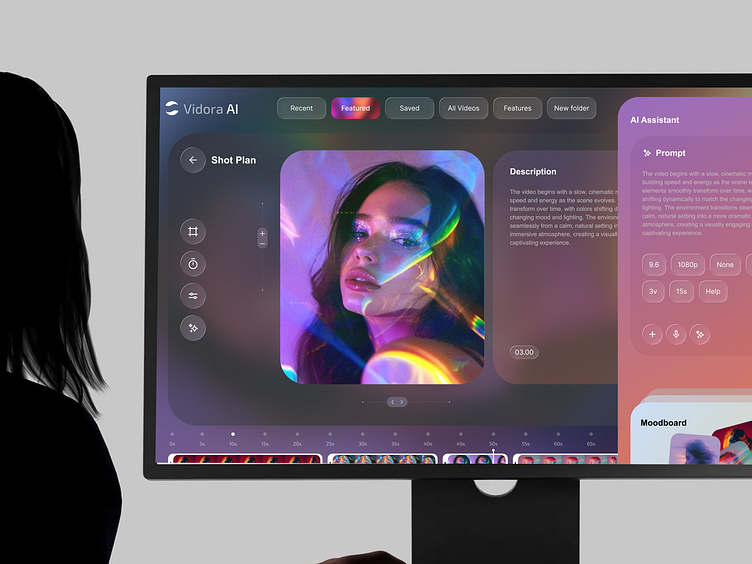
If you are making one-shot social clips, feature depth is less important than speed and reliability. But once you move into ad sequences, dialogue-led scenes, or mini narratives, cinematic control becomes the whole game. Kling 3.0 is already being discussed alongside Kling 03 (Omni) around multi-shot AI video, native dialogue, and cinematic control, which gives you a clear checklist for what to compare in any alternative.
Start by mapping your actual scene needs. Do you only need single-shot clips for hooks and paid ads? Do you need multi-shot storytelling with shot changes that still preserve character identity? Do you need native dialogue, or are you planning to replace audio in post? Every one of those choices changes which feature matters most.
For more experimental workflows, you may also care whether a tool fits broader exploration around an open source ai video generation model, an open source transformer video model, or an image to video open source model. If your pipeline includes compositing, local experiments, or custom prompting habits, feature flexibility can be as important as pure visual quality.
How to compare prompt responsiveness
The best prompt test is not “make something cool.” It is a controlled instruction stack. Give both tools the same prompt with camera direction, emotional direction, environment detail, and pacing. Example: Medium shot, rainy neon street at night, camera dolly left while subject looks over shoulder, expression shifts from suspicious to relieved, reflections visible on wet pavement. Then regenerate that prompt three times.
You want to learn four things fast:
- Does the model follow camera instructions?
- Does it respect emotional direction beyond a generic face?
- Does environment detail remain coherent?
- Can it repeat a good result without fighting you?
Prompt fighting is expensive. If you keep rewriting instructions just to get basic framing or expression obedience, the tool is draining time even when the outputs look good. In production, controllability beats flashy demo clips every single time.
Try one more comparison: rewrite the same scene in simple language and then in dense, director-style language. The stronger tool should handle both reasonably well. If one model only works when prompted in a very specific way, that is a workflow constraint you should price in.
Choose the tool with the least friction between idea and result. If Kling gives you stronger cinematic behavior but requires more credits to land the shot, while HappyHorse responds more predictably to your prompt style, that gap may matter more than a slight quality difference. For repeat work, the best model is usually the one that feels cooperative.
Pricing, Value, and Final Recommendation in HappyHorse vs Kling 3.0

How to judge value beyond subscription price
Kling is widely perceived as excellent for video quality, but cost, access, and platform behavior come up often enough that they have to be part of the buying decision. One Reddit comment goes as far as saying “no other platform, no other AI is as good as KLING for videos right now,” while other posts complain about pricing frustration and platform behavior. That split is familiar: premium-looking results can still become a bad fit if the workflow feels expensive, gated, or inconsistent.
The smarter way to compare value is to ignore sticker price for a minute and calculate cost per usable clip. Track how many generations it takes to get one result you would actually publish. Then track retry rate, render consistency, and how much editing you need after generation. A cheaper plan that needs six retries and manual fixes can cost more than a premium plan that delivers a clean clip in two attempts.
Use this value formula:
Total spend for test batch ÷ number of usable clips = effective clip cost
Then add post time. If one tool saves 20 minutes per clip because lip-sync, emotion, and motion are cleaner, that is real value.
Best pick by creator type
For social-style talking-head videos and ad creatives, compare Kling against a high standard, not just against HappyHorse. Community discussion around Kling versus Veo 3 includes the view that Veo 3 may be more cost-effective for social-media scaling because lip-sync quality is noticeably better and realistic expressions are stronger. That is a great benchmark because it tells you exactly what to measure: usable lip-sync, believable expressions, and scale economics. If HappyHorse gets closer to Kling on those metrics while offering better access or lower spend, it can still be the right choice.
If your workflow leans toward experimentation, local control, or questions around how to run ai video model locally and whether an open source ai model license commercial use fits your business, then value is not only about render quality. It is also about control over deployment, flexibility, and operational predictability. In that kind of setup, a model that is easier to integrate or less restrictive can outperform a visually stronger hosted tool in total workflow value.
Here is the direct recommendation framework I use:
- Choose Kling 3.0 if realism, lip-sync, and motion control are the top priorities.
- Choose HappyHorse if it better matches your budget, access requirements, or preferred workflow after side-by-side testing.
- If you make mostly talking-head or dialogue-heavy content, weight lip-sync and facial believability highest.
- If you make cinematic social ads, weight camera obedience, realism, and emotion highest.
- If you make movement-heavy scenes, test hands and identity continuity before buying anything long term.
The best result from a happyhorse vs kling 3.0 comparison is not a universal winner. It is a measured answer to a practical question: which tool gets your specific type of video to usable quality faster, more consistently, and at a lower real cost?
Conclusion

Kling 3.0 currently looks like the stronger first pick when your videos depend on realism, spoken delivery, emotional performance, and motion control. The research trail is clear: it is generating heavy buzz, it is being reviewed specifically for realism and camera moves, and Kling 2.6 already established a strong reputation for native audio, lip-sync, talking-head clips, and influencer-style ads. That gives Kling 3.0 a real advantage if your goal is polished output with minimal compromise.
HappyHorse is still worth serious testing when budget, access, workflow preference, or broader tooling flexibility matter more than chasing the most talked-about model. If your setup overlaps with interests like an open source ai video generation model, image to video open source model workflows, or a more customizable production stack, that can shift the decision.
The cleanest buyer-style verdict is simple. If you need the best shot at high-end talking heads, strong facial realism, and better motion behavior, start with Kling 3.0. If you need a tool that better fits your budget or production process, test HappyHorse against Kling using short benchmark prompts, a motion scorecard, and a real cost-per-usable-clip calculation. Pick the one that gives you the highest percentage of publishable results for the videos you actually make.