 HappyHorse Model
HappyHorse vs WAN 2.5: Two Open Source Video Models Compared
If you want an open source video model you can actually use for real projects, the key question is not which one sounds better on paper, but which one fits your workflow, hardware, and output goals fastest.
HappyHorse vs WAN 2.5 at a glance: which model fits your project
When people compare happyhorse vs wan 2.5, the smartest starting point is use case fit, not abstract benchmark talk. WAN 2.5 is repeatedly positioned as a strong choice for quick content generation, especially short commercials, teaser shots, influencer-style clips, and experimental visuals. That matters because a lot of real-world video work is not “make one perfect film scene.” It is “ship a usable clip today, test the hook, revise the prompt, and publish.” If that sounds like your workflow, WAN 2.5 deserves first priority.
Best use cases for WAN 2.5
WAN 2.5 looks strongest when speed-to-output and sound matter together. One comparison source specifically frames WAN as best for quick content generation, with examples that map directly to production work: short ads, teaser content, social-first clips, and stylized experiments. Separate research on the WAN family also notes native audio generation, which is a practical differentiator if you are building scenes where sound is part of the asset rather than an afterthought.
That native audio support changes the pipeline. Instead of generating silent clips, exporting them, and stitching in rough sound elsewhere, you can test whether the model can give you a closer-to-finished result in fewer steps. Later WAN-family research also points to ongoing gains in audio-video synchronization, so if you are evaluating spoken scenes, ambient sound, or cinematic timing, WAN is already aligned with those priorities.
What to verify before choosing HappyHorse
HappyHorse needs more caution. The available research notes do not provide verified performance details, side-by-side quality metrics, or confirmed strengths on tasks like dialogue, motion handling, camera control, or audio. If you are looking at the happyhorse 1.0 ai video generation model open source transformer space, do not assume it matches WAN 2.5 just because both are described as open models.
Before committing to HappyHorse, verify five things from current documentation or demos: whether it supports text-to-video, whether it supports image-to-video, what output resolutions are available, whether audio is included natively, and what the latest demos look like on prompts close to your own work. Also confirm setup friction. A model can look promising until you discover the local workflow is undocumented, the weights are gated, or the inference path is unstable on your hardware.
The simplest decision rule is this: choose WAN 2.5 first for fast-turnaround, dialogue-aware, or audio-led experiments. Shortlist HappyHorse only after confirming it supports the exact output type you need. That rule saves time because it puts proven practical strengths first and unknowns second. For anyone selecting an open source ai video generation model for production, reducing unknowns early usually matters more than chasing theoretical upside.
Feature-by-feature breakdown in happyhorse vs wan 2.5
A feature comparison only helps if it focuses on what affects the final clip and the number of tools you need around it. In happyhorse vs wan 2.5, the most practical differentiator is audio.
Audio generation and sync
WAN 2.5 includes native audio generation according to multiple sources in the research, and later WAN-family updates continue improving audio-visual synchronization. That gives WAN an immediate edge for creators making clips with spoken lines, ambient backgrounds, music cues, or sound-led social content. Native audio can remove one entire stage of post-production experimentation, especially when you are still validating concepts.
Audio-video sync is where this becomes more than a checkbox. If a model can generate sound but cannot align it with visual timing, lip movement, cuts, or environmental action, you still end up rebuilding the scene elsewhere. The WAN family is being judged partly on that synchronization quality, and later version notes explicitly highlight continued progress there. That makes WAN the better first test if your prompt includes dialogue timing, cinematic pauses, or action-linked sound.
HappyHorse should be treated as unverified here until current documentation proves otherwise. If there is no clear evidence of native audio, assume you will need an external sound workflow. If there are demos, test whether they show genuine synchronized output or just silent visuals with separately added audio in the showcase reel.
Motion, camera behavior, and dialogue realism
The next set of features readers actually care about in side-by-side testing is motion consistency, camera behavior, prompt adherence, and whether characters remain believable across a shot. Available practical signals point in WAN’s favor. Research mentions WAN 2.5 as a contender for realistic cinematic dialogue, and a user comment on WAN 2.1 praises strong dialogue handling plus “amazing camera motion,” especially how movement reveals a subject and sticks to intended motion paths.
That matters because camera motion is where many video models fall apart. A prompt can ask for a slow dolly-in, a reveal around an object, or a handheld push toward a speaking subject, but the output drifts, jitters, or snaps into a different framing. If a model holds movement coherently, it becomes much more usable for trailers, dramatic social clips, and product shots.
Prompt adherence should also be part of the breakdown. On WAN, the practical expectation based on current discussion is that motion and camera direction are areas worth testing aggressively because they may be strengths. With HappyHorse, avoid guessing. Pull the latest demos and see whether the model holds character identity, maintains scene geometry, and preserves action continuity from first frame to last.
If your shortlist includes an open source transformer video model for dialogue or cinematic shots, prioritize direct scene tests over marketing language. A single 6-second test with camera movement and one speaking subject will reveal more than ten feature lists. Right now, WAN has more concrete positive signals in audio, dialogue realism, and movement behavior, while HappyHorse still needs verification before it can be trusted for the same jobs.
How to choose between HappyHorse vs WAN 2.5 for common video workflows

The easiest way to choose is to map each model to the job you need done this week, not the dream pipeline you might build later. Different workflows expose different strengths immediately.
Short ads, social clips, and teasers
For short commercials, teaser content, influencer-style clips, and quick experimental visuals, WAN 2.5 is the safer first test. That is not a vague preference; research repeatedly positions WAN as strong for fast content generation in exactly those categories. If you are making a 5- to 15-second hook for a product, a dramatic teaser cut, or an eye-catching social visual with sound, WAN gives you the highest chance of getting to a usable draft quickly.
The speed advantage matters because short-form creative work is highly iterative. You are often trying five prompt variants, two camera approaches, and three pacing ideas before settling on one. A model that gets you to “good enough to review” sooner can beat a theoretically stronger model that takes more setup, more post, or more troubleshooting. For paid short-form work, that difference can decide whether the model stays in your toolbox.
Image-to-video, dialogue, and experimental scenes
For dialogue-heavy scenes, WAN 2.5 deserves priority testing. Current references point to realistic dialogue, strong motion, and notable camera behavior. If your prompt includes two people talking, a cinematic over-the-shoulder, ambient sound, or timing-sensitive reaction shots, WAN aligns better with the available evidence.
For image to video open source model use cases, do not assume parity. If HappyHorse and WAN both claim image-to-video support, compare actual sample outputs at the same aspect ratio, clip length, and prompt complexity. Look for how much motion is introduced, whether the source image identity is preserved, whether the background warps, and whether the scene drifts away from the original composition. Those details matter more than feature tables.
For open source transformer video model searches in general, use a practical checklist:
- What output style do you need: ad-like polish, stylized motion, cinematic dialogue, or abstract visuals?
- Do you need native audio, or is silent video acceptable?
- What hardware do you already have available?
- How difficult is the local install path?
- Is the commercial-use license clear enough for client or monetized work?
If a model fails even one of those checks, that is not a minor inconvenience; it is often the reason the workflow breaks. In happyhorse vs wan 2.5, WAN is currently the easier recommendation for common creator workflows because the research supports its strengths directly. HappyHorse may still be worth testing, especially if its latest releases show specific value in your niche, but it should earn its place through verified outputs, not assumptions.
Running HappyHorse vs WAN 2.5 locally: hardware, VRAM, and setup tips
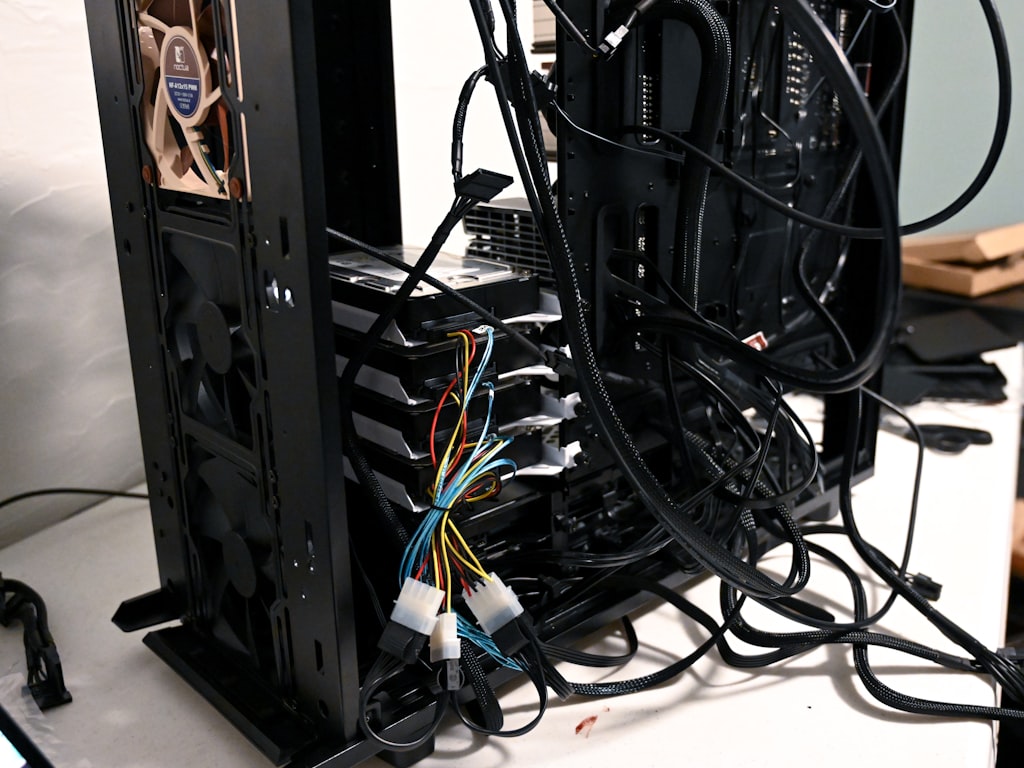
A lot of open video model comparisons ignore the point where most local workflows actually succeed or fail: hardware. You can have the right prompts and the right checkpoints, but if VRAM is tight, everything becomes slower, lower resolution, and more fragile.
Minimum practical hardware expectations
For anyone trying to run ai video model locally, VRAM is the hard constraint. Research notes include a blunt but useful guideline from local AI users: more than 32 GB of VRAM is a meaningful threshold for truly usable results in demanding workflows. That does not mean sub-32 GB cards are useless. It means you should expect heavier compromises in speed, clip length, resolution, batch size, and reliability.
Consumer GPUs under 32 GB can still be fine for experimentation. You can test prompts, inspect motion tendencies, and validate whether a model is worth deeper investment. But once you push toward longer clips, higher resolutions, or more complex inference settings, those cards can become a bottleneck fast. Out-of-memory errors, slow iteration loops, and unstable settings are common signs that the hardware is limiting the workflow more than the model itself.
A practical expectation: if your goal is serious local video generation rather than casual sampling, plan around 32 GB+ VRAM if possible. If you are below that threshold, narrow your tests. Keep clip lengths short, lock resolution, use a small benchmark set, and judge whether the model’s core behavior is promising before spending hours optimizing around memory limits.
NVIDIA vs AMD for local video model workflows
For the easiest setup path, NVIDIA remains the safest choice. Research on local AI hardware specifically recommends NVIDIA for users who want the simplest route to working local AI with fewer compatibility issues. That advice maps well to video generation, where dependencies, inference libraries, CUDA support, and community troubleshooting often favor NVIDIA first.
If your priority is productivity, not hardware experimentation, NVIDIA saves time. You are more likely to find tested install guides, prebuilt workflows, and issue threads that match your exact problem. That matters a lot when evaluating models like WAN 2.5 or HappyHorse locally, because you want to spend your time judging outputs, not rebuilding environments.
AMD can still be a strong value option, especially for Linux-savvy users who are comfortable troubleshooting. Research frames AMD as attractive for better price-to-performance if you are willing to handle the extra setup effort. That is a real tradeoff: lower hardware cost can be worth it, but only if you can absorb the configuration work. If your local stack already runs well on Linux and you do not mind solving edge cases, AMD may stretch your budget further.
For either model, save yourself pain by treating setup as part of the benchmark. Track install time, package friction, memory behavior, and export reliability. A local model that produces great samples but takes two days to stabilize is not automatically the better production choice.
Testing happyhorse vs wan 2.5: a practical comparison framework readers can use
The fastest way to cut through model hype is to run a small, repeatable benchmark that mirrors the work you actually do. A fair test tells you whether the difference is coming from the model or from your settings.
Prompts and scenes to test first
Use the same four prompt types on both models. First, test a product teaser: for example, “a dramatic 8-second commercial shot of a luxury watch on black glass, slow dolly-in, reflective highlights, subtle ambient sound.” This reveals product rendering, camera control, and whether the model can create ad-ready tension.
Second, test a dialogue clip: “two characters in a dim café exchanging one tense line each, cinematic close-ups, natural pauses, soft room tone.” This exposes motion realism, facial behavior, timing, and audio potential. Third, test a camera-move scene with no dialogue: “a handheld push through a neon alley toward a singer under rain, ending in a tight reveal.” This stresses camera consistency and motion stability. Fourth, test an image-to-video conversion using the same source frame on both models to evaluate preservation and animation quality.
What results to score in every run
Score each output on directly useful criteria:
- speed to first usable result,
- motion stability,
- camera consistency,
- prompt adherence,
- audio quality or audio sync when available,
- and whether character behavior holds across the shot.
Use a simple 1–5 score for each category so patterns emerge quickly. A model that scores slightly lower visually but produces usable clips twice as fast may still be the better fit for production.
Save every setting for fairness: seed, resolution, clip length, inference steps, frame rate if exposed, scheduler settings if exposed, and any audio parameters. Without that record, it is too easy to compare a conservative WAN run against an aggressive HappyHorse run and draw the wrong conclusion. Consistency is what turns a casual test into a reliable benchmark.
External comparison sites can still help. Research references Artificial Analysis as tracking dimensions like quality ELO, speed, and pricing across video AI models and providers, even though the quoted snippets do not include exact numbers. Those dashboards are useful for context, but they are not enough for niche workflows. A leaderboard snapshot does not tell you whether your product teaser keeps reflective surfaces clean, whether your dialogue scene lands emotional timing, or whether your chosen open source ai video generation model exports stable clips on your machine.
If you want a real answer, run the benchmark on one project-specific prompt set and review the clips side by side. That single hour of testing will usually answer the happyhorse vs wan 2.5 question better than a week of browsing examples.
Licensing, local use, and final recommendations in happyhorse vs wan 2.5

The last filter is the one people often leave until too late: licensing. “Open source” is not the same thing as unrestricted commercial deployment, and this is where promising experiments can run into real friction.
Commercial-use checks before you commit
Before adopting either model, verify the exact open source ai model license commercial use terms. Check the code repository license, the model weights license, and any separate rules attached to outputs or bundled assets. Those terms are not always identical. A repository may be permissive while the weights have additional restrictions, or outputs may be allowed only under certain conditions.
For client work or monetized content, read the fine print on redistribution, hosted services, attribution requirements, field-of-use restrictions, and whether generated outputs are explicitly cleared for commercial usage. Also check whether a demo site uses the same license terms as the downloadable release. That distinction matters more often than people expect.
If HappyHorse has less mature documentation than WAN, licensing clarity becomes even more important. Unclear rights are a workflow risk just like unstable installs or weak motion quality. If you cannot confirm what you are allowed to ship, the model is not production-ready for paid work no matter how nice the samples look.
Best pick by creator type
For creators who need fast output, native audio, and dialogue-oriented testing, WAN 2.5 is the best first pick based on the available evidence. It is repeatedly positioned as strong for quick content generation, and the WAN family’s native audio generation plus improving audio-video sync make it more attractive for sound-aware workflows. Add in the practical praise for dialogue scenes and camera motion, and WAN is the more validated choice right now.
HappyHorse should be evaluated only after you confirm three things: that it supports the exact capability you need, that the local setup path is workable on your hardware, and that the license fits your intended use. If those checks pass and the latest demos look strong for your specific style, then it deserves a side-by-side test. Until then, treat it as a candidate, not a default.
The most practical shortlist looks like this:
- Test both models on one real prompt set.
- Confirm your hardware can sustain the workflow without painful compromises.
- Review commercial-use terms for code, weights, and outputs.
- Keep the model that gives you usable clips with the fewest workflow compromises.
That process sounds simple because it is. In local video work, the best model is the one you can install, afford to run, legally use, and repeatedly get good clips from without fighting the stack every day.
Conclusion

If you need fast, audio-aware video generation right now, start with WAN 2.5. It has the clearest practical strengths in quick content generation, native audio, improving sync across the WAN family, and strong early signals for dialogue and camera behavior.
HappyHorse is still worth keeping on the radar, but it needs verification before it earns a place in a serious local workflow. Check current demos, confirm supported tasks, inspect setup friction, and read the license carefully. Then run one side-by-side benchmark using your real prompts, your real hardware, and your actual delivery requirements.
That approach keeps the decision grounded. Start with the model that is easiest to validate for your use case, confirm whether your machine can handle it, and keep the one that gives you usable clips with the least friction. For most workflows today, that means WAN 2.5 first, then a verified test to see whether HappyHorse can justify the switch or the addition.